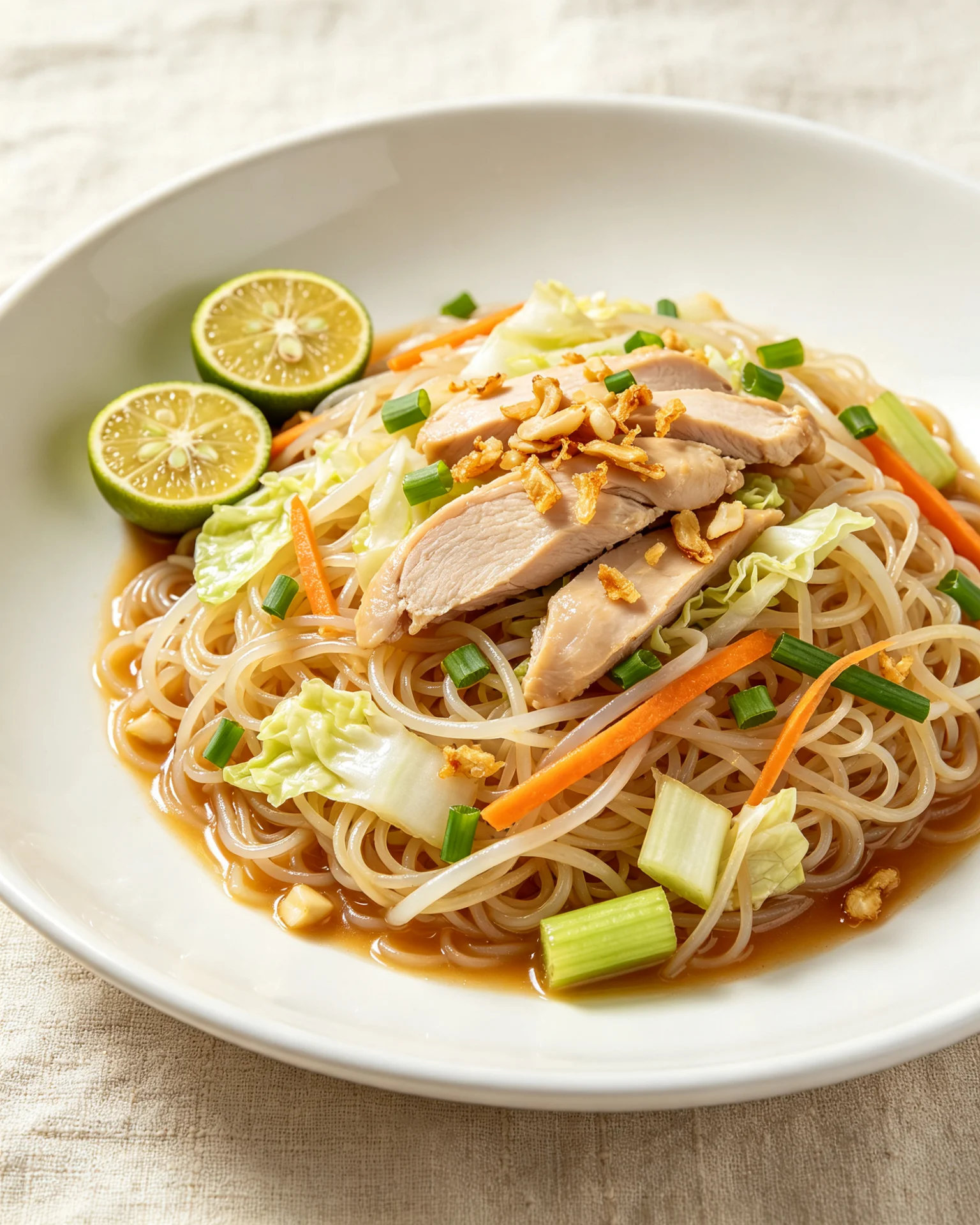
Pancit Bihon Recipe (Filipino Noodles)
Jump to Section
The first time I made pancit bihon at home, I soaked the noodles in warm water while I prepared everything else. By the time I was ready to cook, they had been in the water for about 20 minutes. They looked fine, soft, pliable, easy to handle. The moment they went into the hot wok with the broth, they collapsed. Within two minutes they were a soft, slightly gluey mass that stuck to everything and had no texture at all. The soaking had over-hydrated the rice starch before cooking even began. When the noodles hit the wok there was no absorption capacity left, they sat in the liquid and turned to mush.
The fix is cold water and a timer. Eight to ten minutes in cold water produces noodles that are pliable, they bend without snapping, but still have resistance. They spring back slightly when you release them. That resistance is the remaining absorption capacity that the broth and seasoning will fill during cooking. Soak too long and it is gone.
What is pancit bihon and what makes it different from other pancit?
Pancit bihon guisado is the thin rice vermicelli version of pancit, the most widely made Filipino noodle dish and one of the most recognisable foods at Filipino celebrations. Bihon refers to the noodles: thin threads made from rice starch and water, dried into bundles, sold in clear plastic packages at every Asian grocery store.
There are several distinct types of pancit and the differences are structural, not just superficial.
Pancit bihon uses rice starch noodles. Rice starch absorbs liquid readily, the noodles soak up the seasoned broth during cooking, depositing the flavour compounds inside each strand. The finished dish is light, slightly chewy, and seasoned throughout. It is the most delicate of the three main types.
Pancit canton uses egg and wheat noodles, the same family as lo mein. Wheat noodles do not absorb broth the same way. They cook through by boiling or stir-frying and the sauce coats the outside rather than penetrating inside. The result is chewier, richer, and more substantial.
Pancit sotanghon uses glass noodles made from mung bean starch. Mung bean starch produces a translucent noodle with a slippery, slightly gelatinous texture. It absorbs liquid differently from rice starch and the finished texture is softer and less distinct than bihon.
This recipe is bihon. If you use canton or sotanghon noodles the cooking technique changes, the soaking instructions, the broth volume, and the final texture will all be different.
Where does pancit come from and why is it served at birthdays?
Pancit arrived in the Philippines with Hokkien Chinese traders from Fujian Province, who established trading communities in the Philippine archipelago from the 10th century onward. The word pancit itself is borrowed from the Hokkien pian i sit, meaning something conveniently cooked. The noodle dish came with it, adapted over centuries to local ingredients and Filipino cooking traditions.
The birthday tradition comes from the same Chinese cultural roots. In Chinese and later Filipino belief, long noodles symbolise long life, the length of the noodle strand represents the length of the life of the person being celebrated. Pancit served at Filipino birthday parties is always kept uncut. The long strands hang from the serving spoon and guests eat them without breaking them. Cutting the noodles during preparation, or snapping them before serving, is considered bad luck, it symbolically shortens the life of the person being honoured.
This is why pancit is present at almost every Filipino birthday table regardless of what else is served. It is not just food. It is a wish made edible.
How do you soak bihon noodles correctly?
Cold water. Eight to ten minutes. Drain and use immediately.
Ingredients
- 250g dried bihon (rice vermicelli)
- 300g chicken thighs, sliced thin
- 1 medium onion, sliced
- 4 cloves garlic, minced
- 1 large carrot, julienned
- 1/4 head cabbage, shredded
- 2 stalks celery, sliced
- 3 tbsp soy sauce
- 1 tbsp oyster sauce
- 2 cups chicken broth
- Calamansi or lime for serving
- Salt and black pepper to taste
Instructions
Step 1: Soak the bihon noodles
Soak the bihon noodles in cold water for 8-10 minutes. They should be pliable but still have some resistance.
Step 2: Heat oil in a
Heat oil in a large wok or skillet over medium-high heat.
Step 3: Sauté the garlic and
Sauté the garlic and onion until fragrant and translucent.
Step 4: Add the chicken slices
Add the chicken slices and cook until browned and cooked through.
Step 5: Add the carrots, celery
Add the carrots, celery, and cabbage. Stir-fry for 3-4 minutes until the vegetables are slightly softened.
Step 6: Pour in the chicken
Pour in the chicken broth, soy sauce, and oyster sauce. Bring the mixture to a simmer.
Step 7: Season with salt and
Season with salt and black pepper to taste.
Step 8: Add the drained bihon
Add the drained bihon noodles. Using tongs, toss the noodles continuously so they absorb the broth evenly.
Step 9: Continue cooking until the
Continue cooking until the liquid is almost fully absorbed, but the noodles are still moist.
Step 10: Serve hot with calamansi
Serve hot with calamansi or lime halves on the side to be squeezed over the noodles before eating.
You might also like: Check out our complete Filipino cooking guide for more essential ingredients and techniques.
Pancit Bihon Recipe (Filipino Noodles)
Filipino Recipes, Main Dish, Rice Noodles
PT15M
PT25M
PT40M
Nutrition Facts
Ingredients
- 250g dried bihon (rice vermicelli)
- 300g chicken thighs, sliced thin
- 1 medium onion, sliced
- 4 cloves garlic, minced
- 1 large carrot, julienned
- 1/4 head cabbage, shredded
- 2 stalks celery, sliced
- 3 tbsp soy sauce
- 1 tbsp oyster sauce
- 2 cups chicken broth
- Calamansi or lime for serving
- Salt and black pepper to taste
Instructions
- Soak the bihon noodles in cold water for 8-10 minutes. They should be pliable but still have some resistance. Drain well and set aside.
- Heat oil in a large wok or skillet over medium-high heat.
- Sauté the garlic and onion until fragrant and translucent.
- Add the chicken slices and cook until browned and cooked through.
- Add the carrots, celery, and cabbage. Stir-fry for 3-4 minutes until the vegetables are slightly softened.
- Pour in the chicken broth, soy sauce, and oyster sauce. Bring the mixture to a simmer.
- Season with salt and black pepper to taste.
- Add the drained bihon noodles. Using tongs, toss the noodles continuously so they absorb the broth evenly.
- Continue cooking until the liquid is almost fully absorbed, but the noodles are still moist.
- Serve hot with calamansi or lime halves on the side to be squeezed over the noodles before eating.
Did you make this recipe?
Tag @asianfoodsdaily on Instagram or leave a comment below!
Testing Notes
Tested in Asha's kitchen. Last reviewed June 4, 2025.
Ingredient Substitutions
Substitution notes coming soon.
About Asha
Half Asian, half African cook raised between two food-obsessed cultures. I've spent 10 years learning Asian cooking traditions through family, friends, and thousands of hours at the stove — testing every dish until it works in a standard home kitchen.
Read my full storyTechnique & Pantry Guides
Related Recipes
More delicious dishes you might enjoy


Loading comments...