Buta no Kakuni – Japanese Braised Pork Belly Recipe

There’s a specific kind of pork belly that stops a table cold. Not the crispy-skinned kind. Not the char siu. I’m talking about cubes of pork that have been braised so long and so patiently that they barely hold their shape — silky fat, impossibly tender meat, lacquered with a soy-sweet glaze that stains your chopsticks and makes you want to eat the whole pot.
That’s Buta no Kakuni (豚の角煮). And once you understand how it works, you’ll make it on repeat.
What Is Buta no Kakuni?
Buta no Kakuni translates literally as “square-simmered pork.” Buta (豚) = pig. Kaku (角) = square or cube. Ni (煮) = to simmer in liquid. Put it together and you get the name of one of Japan’s most beloved home-cooked dishes.
It’s a nimono — a category of Japanese simmered dishes — where pork belly is cut into thick chunks and slow-braised in a dashi-based liquid seasoned with soy sauce, sake, mirin, and a touch of sugar. The fat renders completely. The collagen melts into the braising liquid. What you end up with is pork that trembles when you pick it up with chopsticks and dissolves the second it hits your tongue.
This dish has a history worth knowing. It traces back to the Chinese dish Dongpo Pork (东坡肉), which arrived in Japan via Nagasaki’s trade ports during the Edo period (1603–1868). Japanese cooks absorbed the concept and made it their own — lighter seasoning, cleaner flavors, dashi where Chinese versions use rice wine or water. In Okinawa, the same lineage became rafute, braised in awamori. In Nagasaki, it became toba-ni, part of the hybrid shippoku cuisine. Buta no Kakuni is the mainland version that evolved into the dish you’ll find in izakayas and Japanese home kitchens across the country today.
Why This Recipe Works
I’ve made Kakuni more times than I can count. I’ve also made it badly more times than I care to admit.
The first time I tried it, I rushed the braise. An hour and a half felt like a long time, and the pork seemed done. It wasn’t. It was chewy and dense, and the fat was unpleasantly waxy instead of silky. I learned the hard way that pork belly doesn’t negotiate. You braise it until it’s genuinely done — and that takes the time it takes.
The second lesson was the initial blanch. A lot of home cooks skip it or rush it. Don’t. That 60-minute initial simmer in plain water pulls out impurities, excess blood, and the grayish foam that would otherwise cloud your braising liquid and give the dish an off-flavor. Think of it as the prep that makes everything downstream better.
Third: heat. The braise should barely bubble. If it’s boiling, it’s too hot. Aggressive heat toughens pork. Gentle heat dissolves it.
Get those three things right and the rest is straightforward.
Ingredients

The Pork
- 2 lbs (900g) pork belly, skin-on or skinless, cut into 2-inch (5cm) cubes
- 4 slices fresh ginger (for blanching)
- 2 stalks green onion (for blanching)
The Braising Liquid
- 2 cups (480ml) dashi — see notes below on which kind to use
- ¼ cup (60ml) soy sauce — Japanese koikuchi shoyu (dark soy). Kikkoman or equivalent.
- ¼ cup (60ml) sake — regular cooking sake or drinking sake. Not mirin.
- ¼ cup (60ml) mirin — the real stuff, not “mirin-flavored seasoning”
- 2 tablespoons sugar — white or light brown. Some people use rock sugar for extra gloss.
- 1 teaspoon ginger, freshly grated (optional, adds warmth)
To Finish (Optional but Good)
- 4 soft-boiled eggs, peeled, added during the last 30 minutes
- Blanched greens (bok choy, spinach, or broccolini) to serve alongside
- Steamed white rice — this is non-negotiable
Equipment You Need
- Large heavy-bottomed pot or Dutch oven
- Otoshibuta (drop lid) — a round lid slightly smaller than the pot opening. If you don’t have one, cut a circle of parchment paper or aluminum foil and poke a few holes in it. It serves the same function: keeps the pork submerged and ensures even braising without drowning the tops of the pieces in liquid.
A Note on Dashi
Dashi is the backbone of this dish. You have two routes:
Instant dashi (hondashi granules) — This is what I use on a Tuesday. It’s fast, reliable, and widely available. Ajinomoto Hon Dashi is the standard. Mix according to package directions before using.
Homemade dashi — If you have kombu and katsuobushi (dried bonito flakes), 20 minutes gets you a proper pot of the real thing. The flavor is cleaner and more nuanced. Worth it when you’re not in a hurry.
Either option works here. The braising liquid gets so concentrated during cooking that the difference is noticeable but not dramatic.
How to Make Buta no Kakuni
Step 1: Blanch the Pork (60 minutes)

Fill a large pot with enough cold water to submerge the pork belly completely. Add the ginger slices and green onion stalks.
Bring to a boil over high heat, then reduce to a gentle simmer. Cook uncovered for 60 minutes, skimming off the grey foam and fat that rises to the surface every 10–15 minutes.
When time is up, remove the pork and rinse each piece under warm running water. Pat dry. Discard the blanching liquid, ginger, and green onion — their job is done.
What you’re looking for: The pork pieces should be firm and opaque all the way through but not fully cooked. You should still need a knife to cut them easily. The water you’re discarding will be gray and murky. That’s normal and exactly what you want out of the pot before braising.
Step 2: Make the Braising Liquid

In a clean heavy-bottomed pot or Dutch oven, combine the dashi, soy sauce, sake, mirin, and sugar. Stir until the sugar dissolves.
Taste the liquid before adding the pork. It should be savory, slightly sweet, with an edge of umami. It will taste saltier than you expect — this is correct. The pork absorbs and dilutes the seasoning during braising.
Step 3: Braise Low and Slow (1.5–2 hours)
Add the blanched pork belly pieces to the braising liquid in a single layer, fatty-side up. The liquid should come about halfway up the sides of the meat.
Place your otoshibuta or parchment circle directly on the surface of the liquid. This isn’t optional — without it, the tops of the pork pieces dry out and shrivel while the bottoms overcook.
Simmer on the lowest heat your stove will give you. You want a bare, occasional bubble. Not a rolling boil. Not even a consistent simmer. Barely moving.
Cook for 1.5 to 2 hours, flipping each piece gently every 30 minutes. At the 90-minute mark, test doneness: slide a chopstick or thin skewer into the thickest part of a piece. If it goes through with zero resistance, you’re done. If you feel any tug, keep cooking in 15-minute increments.
If adding soft-boiled eggs: Peel them and nestle them into the braising liquid during the final 30 minutes. They’ll absorb the color and flavor of the sauce and become incredible.
Step 4: Reduce and Glaze

Remove the pork (and eggs) from the pot and set aside. Turn the heat up to medium-high. Let the braising liquid boil and reduce for 5–10 minutes until it thickens into a glossy, concentrated glaze that coats a spoon.
Return the pork to the pot and roll the pieces around to lacquer them in the sauce. Keep the heat on for another 2–3 minutes, turning frequently, until each piece is deeply glazed and shiny.
If you want extra gloss, stir in a teaspoon of honey at this stage. Optional but beautiful.
Step 5: Serve

Spoon the pork over steamed white rice. Add the halved soft-boiled eggs on the side.
Garnish with thinly sliced green onion or shiraga negi (fine julienned leek that’s been soaked in cold water until it curls — traditional izakaya style).
The Otoshibuta — Why It Matters

I want to take a second on this because it’s one of those techniques that looks like a minor detail but changes the dish noticeably.
An otoshibuta (落し蓋) is a drop lid — a round lid placed directly on the surface of cooking liquid rather than on top of the pot. It works in three ways: it keeps the food submerged so it braises evenly, it circulates the liquid gently over the food as it simmers, and it slows evaporation without trapping steam the way a regular lid does.
Traditional ones are wooden. I have a stainless steel version that I’ve used for years. But honestly, a circle of parchment with a few poked holes does the job just as well. Don’t skip this step — the difference in how evenly the pork braises is real.
Substitutions and Variations
No sake? Use dry sherry or Shaoxing wine. The flavor won’t be identical but it’ll still work.
No mirin? Mix 1 part honey or sugar with 2 parts dry white wine or sake as a rough substitute. Real mirin is worth buying if you cook Japanese food regularly — it’s a pantry staple, not a specialty item.
No dashi? Use light chicken stock (low-sodium) rather than plain water. Not traditional, but better than nothing.
Pork shoulder instead of belly? You can do it. The texture won’t be as silky because you lose the fat-to-muscle ratio that makes pork belly special, but shoulder braises well and the flavor is good. Use the same method, same timing.
Pressure cooker shortcut: Some people make Kakuni in a pressure cooker in about 45 minutes. The flavor can be quite good but the texture is slightly different — less of the slow melt you get from the stovetop method. If you’re short on time, it works. If you want the full experience, do it on the stove.
Make-Ahead and Storage
This is one of those dishes that gets better overnight. The fat solidifies in the refrigerator, making it easy to skim off (if you want — some people keep it for the flavor), and the pork absorbs even more of the braising liquid while it rests.
Make ahead: Cook the whole recipe, let it cool, refrigerate overnight. Reheat gently on the stove. This is how I’d approach it if I were cooking for guests.
Refrigerator: Keeps well for 3–4 days in an airtight container with the braising liquid. Always store with the liquid — the pork dries out quickly without it.
Freezer: Freezes beautifully for up to 3 months. Freeze in the braising liquid. Thaw overnight in the refrigerator and reheat gently over medium-low heat.
What to Serve with Buta no Kakuni
This dish needs rice. There is no world in which Kakuni doesn’t come with a bowl of steamed short-grain Japanese rice.
Beyond that, blanched bok choy or spinach is the move — the greens cut right through the richness without competing with it. Pickled vegetables (tsukemono) work the same way, that vinegary sharpness a perfect contrast to the sweet-savory glaze. Miso soup rounds things out if you’re building a full Japanese spread. If you want something bolder on the side, a bowl of Kimchi Soup is a surprisingly good call — the fermented heat plays well against the soy-braised pork.
Got leftover Kakuni the next day? Slice it thin and fold it into Yangzhou Fried Rice — the concentrated braising liquid makes an incredible seasoning base and nothing goes to waste. Or shred it over a bowl of Cantonese Congee for one of the most comforting meals you’ll eat all year.
For drinks: a cold Japanese beer, a glass of dry sake, or even a light red wine. Something clean. Nothing that fights with the soy.
Troubleshooting
The pork is chewy after 1.5 hours. Keep going. Underdone pork belly is unpleasantly dense. Some pieces, depending on thickness, need closer to 2.5 hours. Test with a skewer — no resistance means done.
The braising liquid tastes too salty. It’s supposed to be concentrated. The pork will dilute it during braising. Taste it again after 30 minutes with the pork in the pot.
The fat cap looks pale and waxy, not silky. This usually means the heat was too high — the fat didn’t have time to render slowly. If you catch it early, lower the heat. If the dish is already done, you can let the pieces rest in the cooling liquid for another 20 minutes off the heat — residual heat often finishes the job.
The braising liquid has reduced too much. Add a splash of dashi or water and continue. This typically means the heat was too high or you forgot to use the drop lid.
Love Japanese food?
Check out my complete guide to Japanese home cooking, pantry essentials, and techniques.
Frequently Asked Questions
How long does it take to cook Buta no Kakuni? Total cooking time is approximately 3 to 3.5 hours: 60 minutes for the initial blanch, 1.5 to 2 hours for braising, plus about 15 minutes of prep and finishing. The active hands-on time is minimal — most of it is waiting.
Is Buta no Kakuni the same as Kakuni? Yes. Buta means pork in Japanese. Kakuni alone is widely understood to mean pork belly — it’s the shortened name you’ll see on izakaya menus. They’re the same dish.
Can I use a pressure cooker or Instant Pot? Yes. Pressure cook for 45 minutes with a natural release. The flavor is excellent and the texture is very good, though slightly different from the stovetop version. Skip the blanching step if using a pressure cooker — replace it with a quick sauté to brown the pork first.
What’s the difference between Buta no Kakuni and Chinese Dongpo Pork? Both are braised pork belly, and both trace to the same Chinese origin. The main differences: Kakuni uses dashi as the braising base, while Dongpo uses Shaoxing wine and soy sauce. Kakuni tends to be leaner on the seasoning — cleaner, lighter flavors. Dongpo Pork is richer, deeper, and often uses Shaoxing as the primary liquid. Related but distinct.
Can I skip the initial blanching step? I wouldn’t. The blanch removes impurities, excess fat, and the compounds that create off-flavors in the finished dish. Without it, the braising liquid turns gray and murky, and the dish tastes muddier. It takes an hour but it’s mostly unattended. Worth it every time.
What type of soy sauce should I use? Kikkoman koikuchi shoyu — the regular dark soy sauce you find in any grocery store. Kikkoman is the most widely available. Don’t use light soy sauce (too thin), Chinese dark soy sauce (too intense), or tamari as a first choice unless you’re gluten-free.
Can I add daikon to this recipe? Yes, and it’s a nice variation. Peel and cut daikon into thick rounds (about 1 inch) and add them to the braising liquid during the last 45 minutes of cooking. The daikon absorbs the braising liquid beautifully and its enzymes help tenderize the pork. It’s more common in home cooking than izakaya versions.
Final Thoughts
Kakuni is a Sunday dish. Not because it’s complicated — it isn’t. Because it asks you to slow down.
You blanch the pork and wait an hour. You braise it and wait two more. You flip it every 30 minutes and listen to it barely bubble. And somewhere in the last 20 minutes, when the glaze reduces and you’re rolling those cubes around in the darkened sauce, the kitchen smells like something you want to eat forever.
This is the kind of cooking I’m always trying to get people into. Not flashy. Not quick. Just patient, repeatable, and completely worth it. If you want the flip side of that — something fast, high-heat, and equally satisfying — Karaage is the Japanese recipe I’d point you to next.
Make it once and I promise you’ll understand why it’s been a fixture in Japanese home cooking for centuries.
Did you make this recipe? I’d genuinely love to hear how it went — especially if something in the instructions tripped you up. That’s useful feedback. Drop a note in the comments or reach me at hello@asianfoodsdaily.com.
You might also like: Check out our complete Japanese cooking guide for more essential ingredients and techniques.
Buta no Kakuni – Japanese Braised Pork Belly Recipe
Japanese, pork, braised
PT150M
PT225M
Nutrition Facts
Ingredients
- 2 lbs (900g) pork belly,
- 4 slices fresh ginger (for blanching)
- 2 stalks green onion (for blanching)
- 2 cups (480ml) dashi
- ¼ cup (60ml) soy sauce
- ¼ cup (60ml) sake
- ¼ cup (60ml) mirin
- 2 tablespoons sugar
- 4 soft-boiled eggs,
- Blanched greens (
- Steamed white rice
Instructions
- Blanch the Pork (60 minutes)
- Make the Braising Liquid
- Braise Low and Slow (1.5–2 hours)
- Reduce and Glaze
- Serve
Did you make this recipe?
Tag @asianfoodsdaily on Instagram or leave a comment below!
About Asha
Half Asian, half African cook raised between two food-obsessed cultures. I've spent 10 years learning Asian cooking traditions through family, friends, and thousands of hours at the stove — testing every dish until it works in a standard home kitchen.
Read my full story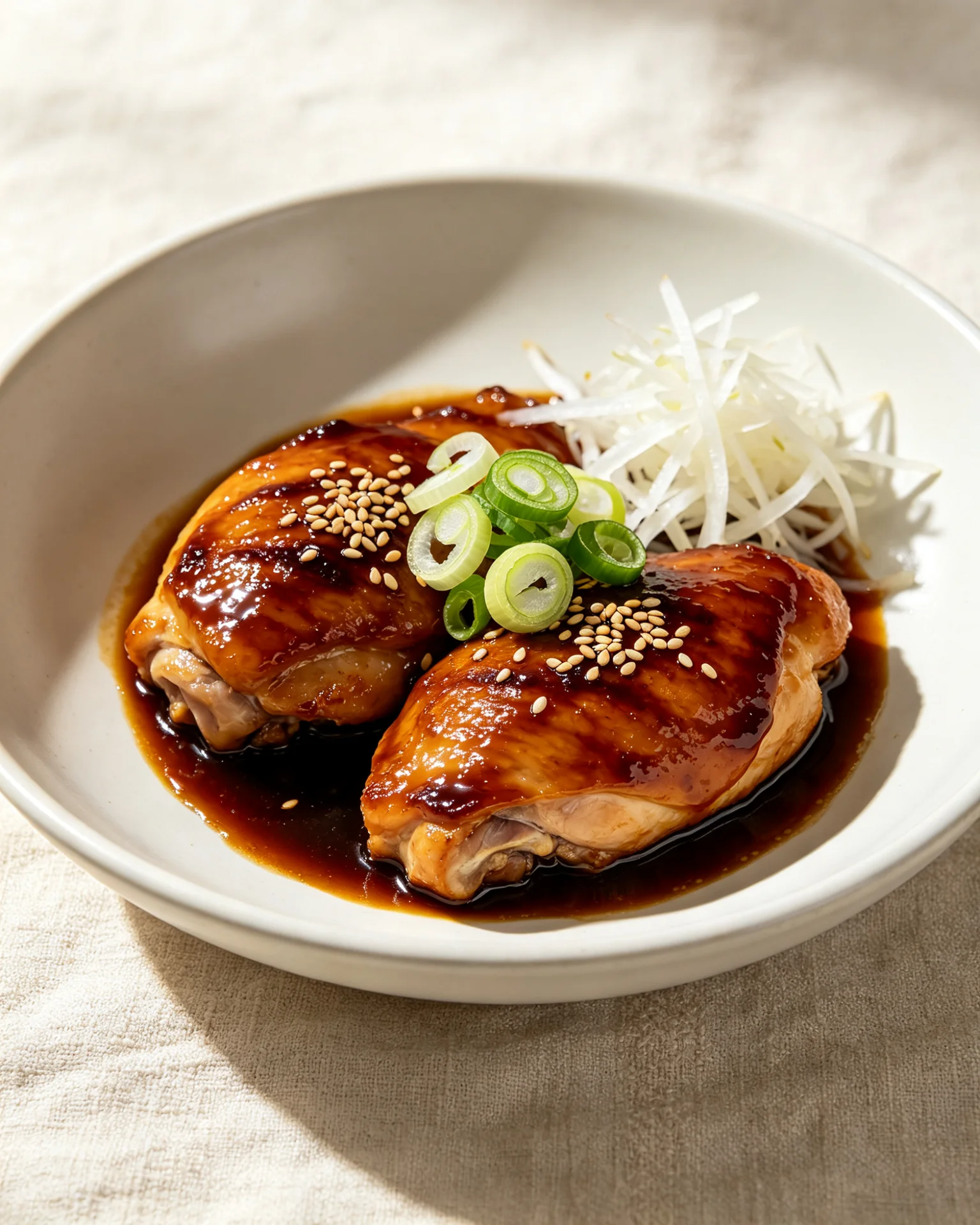


Loading comments...