Korean Beef Bulgogi Recipe (불고기)
Jump to Section
The first time I made bulgogi at home, I blended the marinade, poured it straight over the beef without straining, and cooked it on high heat. The result was beef with black, bitter patches that tasted like burnt sugar rather than caramelised meat. I could not figure out what had gone wrong. The beef was the right cut, the marinade had the right ingredients, the heat was high enough. What I had not accounted for was the pear and onion pulp suspended in the marinade. At high heat, pulp burns in seconds. The beef was cooking in a layer of char before it had a chance to caramelise.
Strain the marinade through a fine sieve before adding the beef. What goes in the bowl is the liquid, the enzyme-rich juice from the pear, the aromatics dissolved from the garlic and ginger, the soy and sugar already integrated. What stays in the sieve is the pulp that would burn. That one step changes the result completely.
What is bulgogi and what makes it different from other Korean BBQ?
Bulgogi (불고기) means fire meat, bul is fire, gogi is meat. It is thinly sliced beef marinated in a soy, sesame, and pear-based sauce, then grilled or pan-cooked over high heat until the edges caramelise and the meat is just cooked through. It is one of the most widely eaten dishes in Korean cuisine and one of the most recognisable Korean foods outside Korea.
What separates bulgogi from other Korean BBQ meats is the marinade and the cut. Galbi uses short ribs and a similar marinade but a different cut and longer cooking time. Samgyeopsal is pork belly cooked without marinade. Dakgalbi is spicy marinated chicken. Bulgogi is specifically thinly sliced beef, and the thin slicing is what makes the caramelisation work, the beef cooks through so fast at high heat that the outside has just enough time to develop colour and sweetness before the interior overcooks.
There are regional variations within Korea. Seoul-style bulgogi is cooked in a shallow broth and the meat almost poaches in the juices. Gwangyang and Eon-yang bulgogi in the southern provinces are charcoal-grilled without broth, drier and more intensely charred. The recipe here is closer to the Gwangyang approach, cooked dry, aimed at caramelisation rather than broth.
What does Asian pear do in the marinade and can you substitute it?
Asian pear (배, bae) is not in the marinade for flavour alone. It contains cysteine proteases, enzymes that break down the peptide bonds in muscle protein fibres, the same bonds that make beef tough when cooked quickly at high heat. These enzymes are the same family found in kiwi (actinidin) and pineapple (bromelain), but at significantly lower concentrations. Asian pear tenderises gently. Kiwi and pineapple tenderise aggressively.
That difference in concentration matters for the marinating window. Kiwi or pineapple left on beef for more than 20-30 minutes starts to break down the protein structure past tenderisation, the beef becomes mealy and slightly mushy. Asian pear can sit on beef for 4 hours without that happening. Overnight up to 12 hours is acceptable for thicker cuts. Beyond 24 hours the enzymes have had enough time to degrade the texture noticeably.
Grating the pear rather than juicing it matters. Grating ruptures the cell walls, releasing both the enzyme-containing cytoplasm and the juice. Juice alone has lower enzyme activity. Grated pear distributed through the marinade tenderises more evenly.
If Asian pear is unavailable, Bosc pear is the closest substitute, similar enzyme content, slightly firmer flesh. A small amount of grated kiwi (no more than 2 tablespoons) works but requires shorter marinating, 30-45 minutes maximum. Apple works for flavour but has lower protease activity and produces less tenderising.
Why do you strain the marinade before adding the beef?
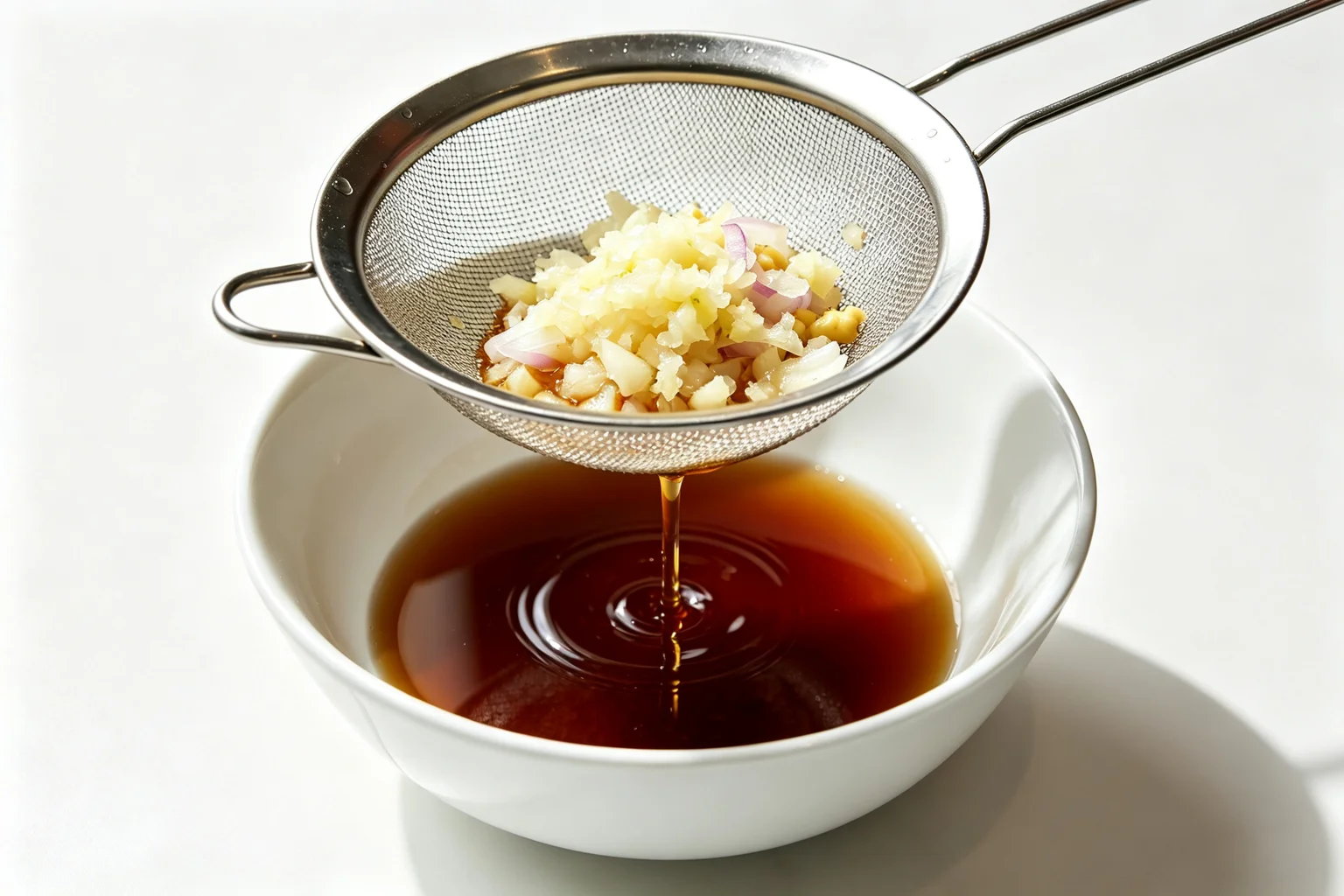
The blended marinade contains pulp from the pear, onion, and ginger. That pulp is mostly cell wall material, pectin, cellulose, and concentrated plant sugars. At the high heat needed for bulgogi caramelisation (180°C+), that pulp burns within seconds of hitting the pan.
When beef marinated with the pulp still in it goes into a hot pan, the pulp chars before the beef surface has reached caramelisation temperature. The beef ends up coated in bitter, dark char rather than the sweet, mahogany caramelisation that defines good bulgogi. It looks similar from a distance. It tastes completely different.
Straining through a fine mesh sieve or cheesecloth removes the pulp and leaves the liquid, the dissolved soy, sugar, sesame oil, garlic and ginger aromatics, and the pear enzymes that have already done their tenderising work on the beef. The liquid caramelises cleanly. The pulp is gone.
What is the best cut of beef for bulgogi?
Ribeye is the standard for good reason. At 20-30% fat by weight, it has enough marbling to stay moist through the brief, violent cook time and to carry the flavour of the marinade without drying out. The fat renders as the beef caramelises, adding richness to the pan juices that collect around the meat.
Sirloin works and is more widely available. Less fat than ribeye, slightly firmer, still produces a good result with a proper marinade and high heat. The caramelisation is slightly less rich.
Chuck is the economical option. More connective tissue than ribeye or sirloin, which the pear enzymes help break down during marinating. Requires the longer end of the marinating window, 3-4 hours, to achieve similar tenderness. Slice thinner than ribeye, 1-2mm rather than 2-3mm.
For any cut, thin slicing is non-negotiable. The target is 2-3mm. At that thickness, the beef cooks through in 60-90 seconds at high heat, enough time for the outside to caramelise before the inside overcooks. Thicker slices require longer cooking, during which the soy-sugar coating burns before the centre is done.
The easiest way to slice this thin at home without a deli slicer: place the beef in the freezer for 20-30 minutes. Partially frozen meat firms up enough to hold its shape under a sharp knife. Slice across the grain, muscle fibres run in parallel lines visible on the surface of the raw beef. Cutting perpendicular to those lines shortens each fibre to the slice thickness, which is what produces the tender chew.
Why does bulgogi need high heat and why cook in batches?
The target of bulgogi is caramelisation, the Maillard reaction producing the sweet, slightly smoky, dark coating that defines the dish. The Maillard reaction requires temperatures above 140°C at the beef surface. Marinade liquid, which is mostly water, keeps the surface temperature at 100°C until it evaporates completely.
When too much beef goes into the pan at once, the marinade releases enough liquid to pool around every piece. The pan temperature drops. The liquid takes time to evaporate. During that time the beef is steaming rather than searing. It cooks through, but grey and without caramelisation.
In small batches, 6-8 pieces maximum per batch in a large pan, the liquid from each piece evaporates quickly. The pan temperature recovers within 30-60 seconds. Caramelisation begins. The edges of the beef darken. The sugar in the marinade contributes a slight sweetness to the char. That is what bulgogi should taste like.
Wipe the pan between batches if residue builds up. Burnt residue from the previous batch will char the next batch from underneath.
What is the difference between a grill pan and a flat skillet for bulgogi?
A grill pan has ridges that elevate the beef above the pan surface. Marinade liquid drains into the grooves between the ridges and away from the meat. The beef surface sits directly on hot metal. Searing and caramelisation happen from the first contact.
A flat skillet traps the marinade liquid around the beef at the same level as the meat surface. The liquid must evaporate fully before the beef can sear. If you add pieces too quickly, liquid from the new pieces rehydrates the surface of the earlier ones and delays caramelisation further.
For a flat skillet, smaller batches are more critical, no more than 4-5 pieces at a time, and wait until the liquid from the previous pieces has completely evaporated before adding more. Cast iron, either grill pan or flat skillet, retains heat better than stainless steel and recovers temperature faster after each batch, producing better caramelisation overall.
Ingredients
Serves 4
Beef and marinade:
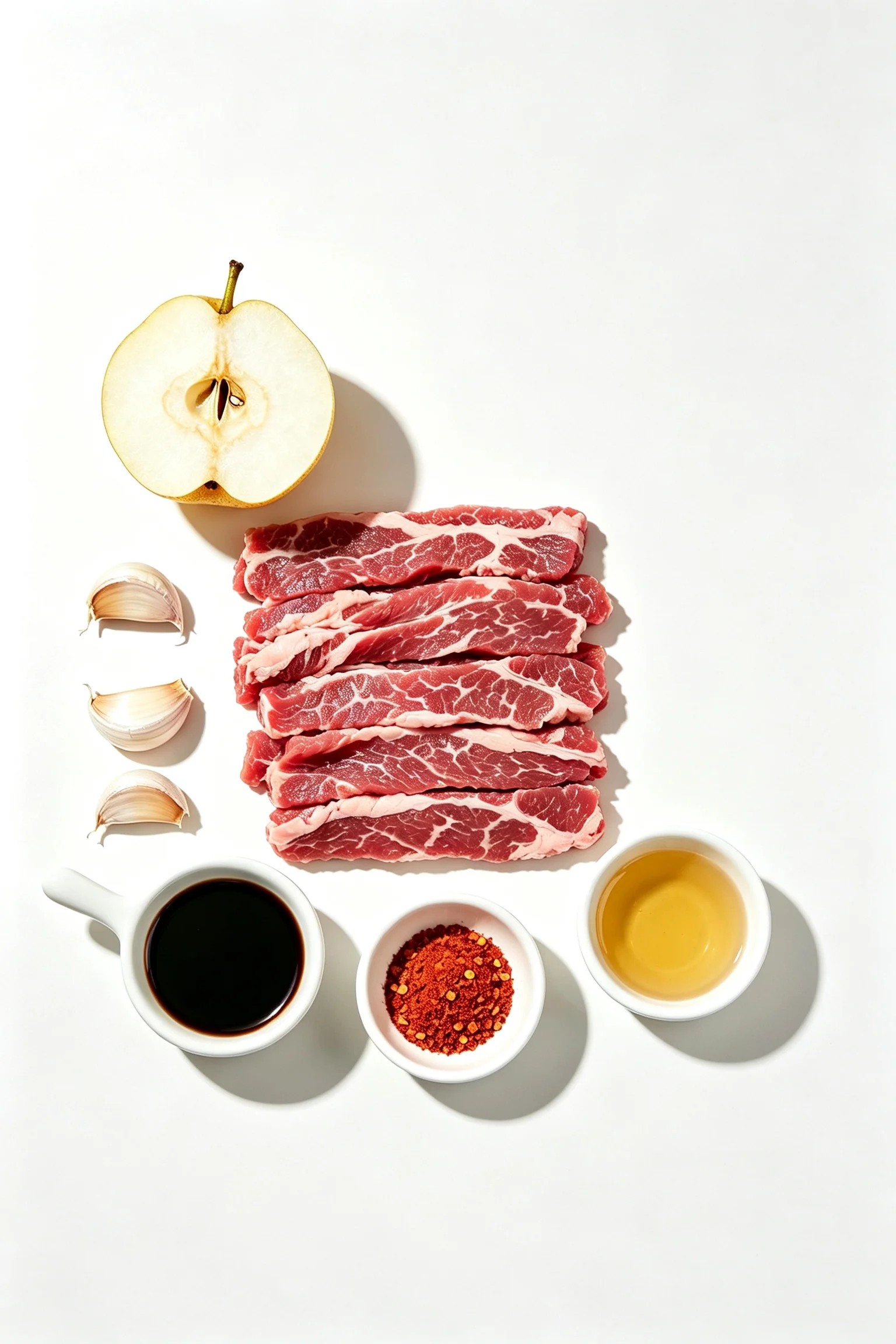
- 600g (1lb 5oz) ribeye, sirloin, or chuck, sliced 2-3mm against the grain
- 4 tbsp soy sauce
- 1½ tbsp brown sugar
- 2 tbsp sesame oil
- ½ Asian pear, grated (approximately 4 tbsp grated flesh)
- 6 garlic cloves, minced
- 2cm fresh ginger, grated
- ½ medium onion, grated
- 2 tbsp Shaoxing wine or mirin
- ½ tsp ground black pepper
- 1 tsp gochugaru (Korean red pepper flakes), optional, for heat
- 3 spring onions, cut into 3cm pieces (add to beef before cooking, not to marinade)
For cooking:
- 2 tbsp neutral oil
To serve:
- Steamed white rice
- Butter lettuce leaves for wrapping
- Ssamjang (Korean fermented bean paste sauce) for dipping
- Perilla leaves
- Sliced green chilli
- Sesame seeds
- Spring onion, finely sliced
Instructions
Start the marinade at least 30 minutes before cooking. 4 hours produces the best result.
Step 1: Make and strain the marinade
Combine soy sauce, brown sugar, sesame oil, garlic, ginger, grated onion, Shaoxing wine, black pepper, and gochugaru in a bowl. Add the grated Asian pear.
Step 2: Marinate the beef
Add the sliced beef to the strained marinade. Mix thoroughly with your hands until every piece is coated.
Remove from the refrigerator 20 minutes before cooking. Cold beef drops the pan temperature more sharply than room-temperature beef.
Step 3: Cook in batches
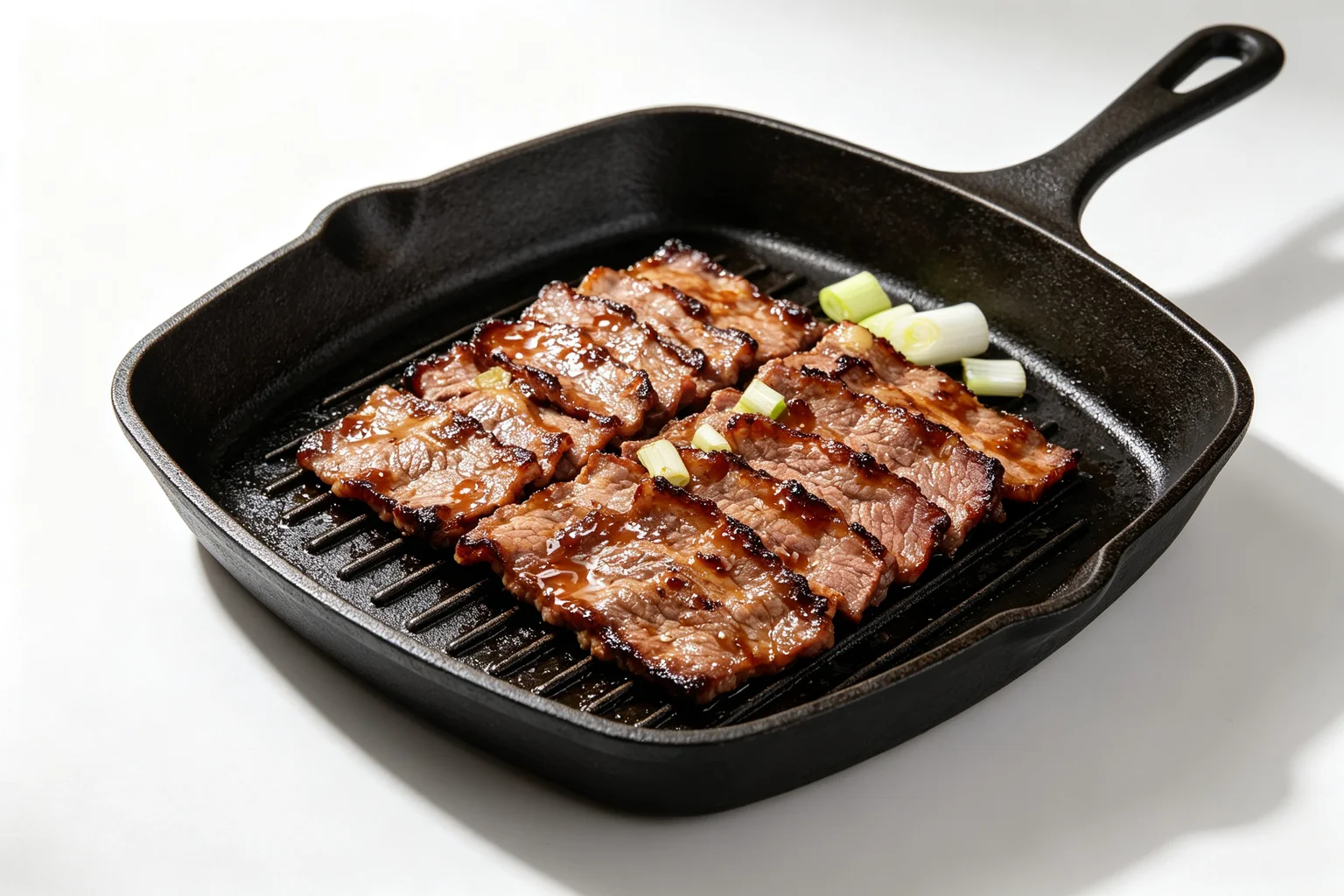
Heat a cast iron grill pan or heavy skillet over maximum heat until smoking. Add 1 tablespoon of neutral oil.
Lay 6-8 pieces in the pan in a single layer without overlapping. Leave without moving for 45-60 seconds. The edges should begin to caramelise and turn dark. Flip each piece once. Cook 30-45 seconds more. Remove to a plate.
Wipe the pan with kitchen paper if residue has built up. Add remaining oil, reheat to smoking, repeat with the next batch.
Step 4: Serve
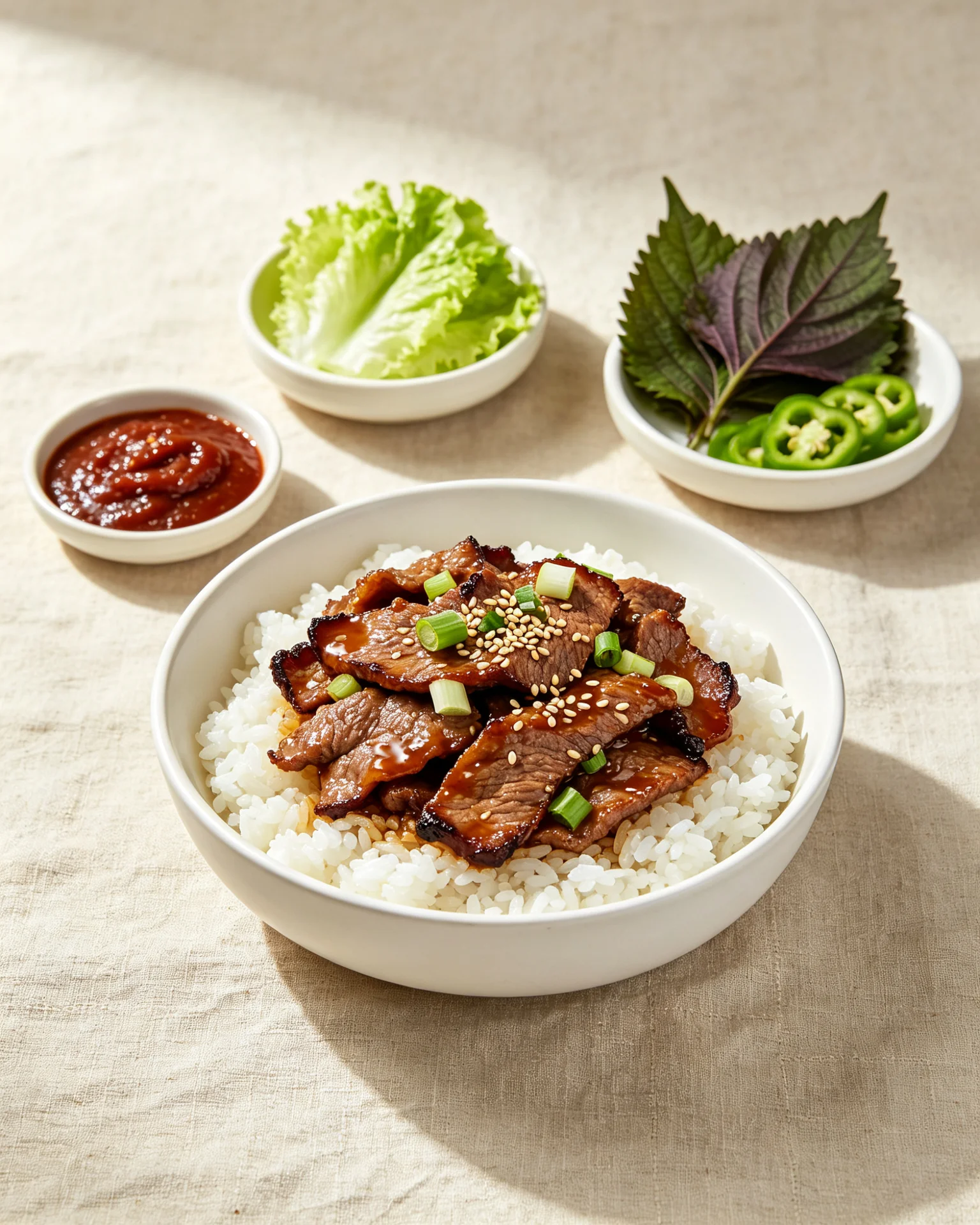
Plate the bulgogi over steamed rice or serve family-style with the full ssam spread: butter lettuce leaves, perilla, ssamjang, sliced green chilli, and spring onion. The traditional way to eat it is to take a lettuce leaf, add a piece of bulgogi, a small amount of ssamjang, a clove of garlic if you like, wrap it up and eat it in one bite.
What do you serve with bulgogi?
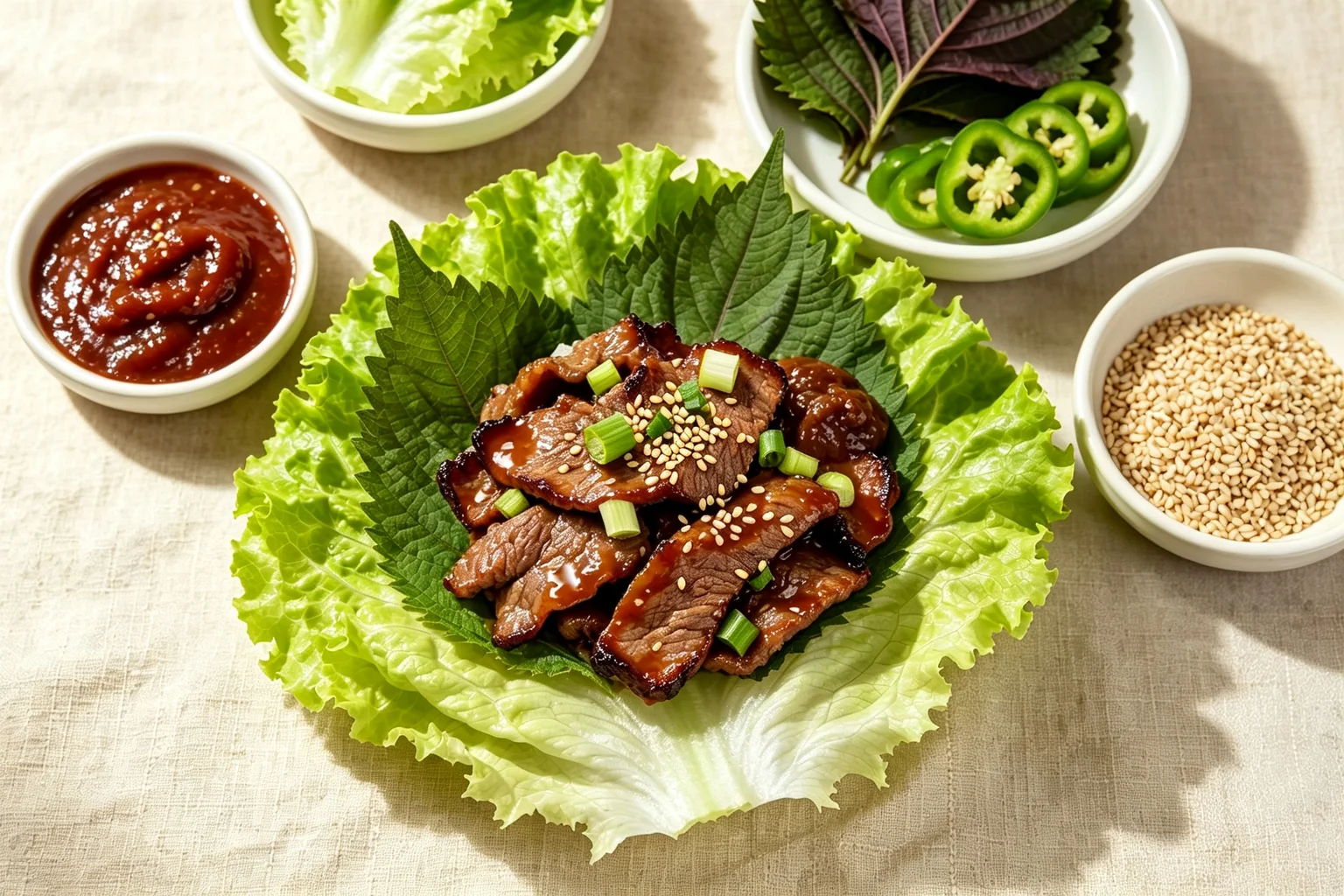
The classic serving format is ssam, wraps made at the table. Butter lettuce or perilla leaves are the wrappers. Each person takes a leaf, adds a piece or two of bulgogi, a small amount of ssamjang (the fermented soybean and chilli paste that goes alongside most Korean BBQ), and closes the wrap. The combination of rich caramelised beef, slightly bitter lettuce, and the deep savoury punch of ssamjang is what makes bulgogi more satisfying than the beef alone.
Alongside ssam, the standard spread is steamed rice, kimchi, pickled radish (danmuji), and whatever banchan (side dishes) are available. Kongnamul (seasoned soybean sprouts) and japchae (glass noodles) are common alongside bulgogi at Korean BBQ restaurants.
If eating as a rice bowl rather than wraps, shred the beef slightly and lay it over rice with a drizzle of sesame oil and a fried egg on top. That version, known loosely as bulgogi deopbap, is one of the most satisfying weeknight applications for leftover bulgogi.
How do you store and reheat bulgogi?
Cooked bulgogi keeps in the refrigerator for 3 days. The caramelised coating softens overnight as the beef absorbs moisture from its own juices. Day two bulgogi is slightly less textured but deeply flavoured from the continued infusion.
To reheat: add a small amount of oil to a very hot pan. Add the bulgogi and spread flat. Leave 30-45 seconds to re-caramelise the surface, then toss and serve. Do not microwave, it steams the beef and removes any remaining caramelisation.
Uncooked marinated beef keeps in the refrigerator for 24 hours and freezes well for up to 3 months. Freeze in the marinade in a sealed bag. Thaw in the refrigerator overnight. The pear enzyme activity slows significantly at freezer temperatures, so the texture does not degrade during freezing.
Love Korean food?
Check out my complete guide to Korean home cooking, pantry essentials, and techniques.
FAQ
Why is my bulgogi grey and not caramelised? Two causes. First, too much beef cooked at once, the marinade liquid pools around the pieces and the beef steams rather than sears. Cook in batches of 6-8 pieces maximum and wait for the liquid to evaporate before adding more. Second, the marinade pulp was not strained, pear, onion, and ginger pulp burns before the beef surface reaches caramelisation temperature, producing bitter char rather than sweet caramelisation.
How long should you marinate bulgogi? 30 minutes is the minimum for the Asian pear enzymes to begin tenderising the beef. 4 hours produces the best texture and flavour. Overnight up to 12 hours works for thicker cuts. Beyond 24 hours the cysteine proteases in the pear continue breaking down the protein structure and the beef develops a slightly mealy texture. If you need to marinate longer than 4 hours, reduce the pear quantity by half to slow the enzyme activity.
Can I make bulgogi without Asian pear? Yes, with a substitute. Bosc pear is the closest, similar enzyme content, slightly firmer texture. A small amount of grated kiwi (2 tablespoons maximum) tenderises effectively but requires a shorter marinating window, 30-45 minutes only. Apple adds similar flavour but has lower protease activity. If no fruit is available at all, the marinade still produces good flavour but less tenderness.
What is ssamjang and do I need it to serve bulgogi? Ssamjang is a thick Korean dipping paste made from doenjang (fermented soybean paste), gochujang (chilli paste), sesame oil, garlic, and spring onion. It is the standard condiment for Korean BBQ wraps and adds a deeply savoury, slightly spicy element that complements the sweet caramelised bulgogi. It is available at most Asian grocery stores in small tubs. Bulgogi is complete without it but the ssam wrap format is noticeably better with it.
You might also like: Check out our complete Korean cooking guide for more essential ingredients and techniques.
Korean Beef Bulgogi Recipe (불고기)
PT10M
PT15M
PT25M
Nutrition Facts
Ingredients
- 600g (1lb 5oz) ribeye, sirloin, or chuck, sliced 2-3mm against the grain
- 4 tbsp soy sauce
- 1½ tbsp brown sugar
- 2 tbsp sesame oil
- ½ Asian pear, grated (approximately 4 tbsp grated flesh)
- 6 garlic cloves, minced
- 2cm fresh ginger, grated
- ½ medium onion, grated
- 2 tbsp Shaoxing wine or mirin
- ½ tsp ground black pepper
- 1 tsp gochugaru (Korean red pepper flakes), optional, for heat
- 3 spring onions, cut into 3cm pieces (add to beef before cooking, not to marinade)
- 2 tbsp neutral oil
- Steamed white rice
- Butter lettuce leaves for wrapping
- Ssamjang (Korean fermented bean paste sauce) for dipping
- Perilla leaves
- Sliced green chilli
- Sesame seeds
- Spring onion, finely sliced
Instructions
- *Start the marinade at least 30 minutes before cooking. 4 hours produces the best result.*
- Combine soy sauce, brown sugar, sesame oil, garlic, ginger, grated onion, Shaoxing wine, black pepper, and gochugaru in a bowl. Add the grated Asian pear. Mix well. Set a fine mesh sieve over a clean bowl. Pour the marinade through the sieve and press the pulp gently to extract as much liquid as possible. Discard the pulp. The strained liquid is the marinade.
- Add the sliced beef to the strained marinade. Mix thoroughly with your hands until every piece is coated. Cover and refrigerate for at least 30 minutes. 4 hours is optimal. The enzymes in the Asian pear work within this window without over-tenderising the meat. Remove from the refrigerator 20 minutes before cooking. Cold beef drops the pan temperature more sharply than room-temperature beef.
- Heat a cast iron grill pan or heavy skillet over maximum heat until smoking. Add 1 tablespoon of neutral oil. Using tongs, lift the beef pieces from the marinade one at a time and shake off excess liquid before placing in the pan. Add the spring onions with the beef. Lay 6-8 pieces in the pan in a single layer without overlapping. Leave without moving for 45-60 seconds. The edges should begin to caramelise and turn dark. Flip each piece once. Cook 30-45 seconds more. Remove to a plate. Wipe the pan with kitchen paper if residue has built up. Add remaining oil, reheat to smoking, repeat with the next batch.
- Plate the bulgogi over steamed rice or serve family-style with the full ssam spread: butter lettuce leaves, perilla, ssamjang, sliced green chilli, and spring onion. The traditional way to eat it is to take a lettuce leaf, add a piece of bulgogi, a small amount of ssamjang, a clove of garlic if you like, wrap it up and eat it in one bite. ## What do you serve with bulgogi? The classic serving format is ssam, wraps made at the table. Butter lettuce or perilla leaves are the wrappers. Each person takes a leaf, adds a piece or two of bulgogi, a small amount of ssamjang (the fermented soybean and chilli paste that goes alongside most Korean BBQ), and closes the wrap. The combination of rich caramelised beef, slightly bitter lettuce, and the deep savoury punch of ssamjang is what makes bulgogi more satisfying than the beef alone. Alongside ssam, the standard spread is steamed rice, kimchi, pickled radish (danmuji), and whatever banchan (side dishes) are available. Kongnamul (seasoned soybean sprouts) and japchae (glass noodles) are common alongside bulgogi at Korean BBQ restaurants. If eating as a rice bowl rather than wraps, shred the beef slightly and lay it over rice with a drizzle of sesame oil and a fried egg on top. That version, known loosely as bulgogi deopbap, is one of the most satisfying weeknight applications for leftover bulgogi. ## How do you store and reheat bulgogi? Cooked bulgogi keeps in the refrigerator for 3 days. The caramelised coating softens overnight as the beef absorbs moisture from its own juices. Day two bulgogi is slightly less textured but deeply flavoured from the continued infusion. To reheat: add a small amount of oil to a very hot pan. Add the bulgogi and spread flat. Leave 30-45 seconds to re-caramelise the surface, then toss and serve. Do not microwave, it steams the beef and removes any remaining caramelisation. Uncooked marinated beef keeps in the refrigerator for 24 hours and freezes well for up to 3 months. Freeze in the marinade in a sealed bag. Thaw in the refrigerator overnight. The pear enzyme activity slows significantly at freezer temperatures, so the texture does not degrade during freezing.
Did you make this recipe?
Tag @asianfoodsdaily on Instagram or leave a comment below!
Testing Notes
Tested in Asha's kitchen. Last reviewed July 25, 2025.
Ingredient Substitutions
Substitution notes coming soon.
About Asha
Half Asian, half African cook raised between two food-obsessed cultures. I've spent 10 years learning Asian cooking traditions through family, friends, and thousands of hours at the stove — testing every dish until it works in a standard home kitchen.
Read my full storyRelated Recipes
More delicious dishes you might enjoy



Loading comments...