Sinigang na Baboy Recipe
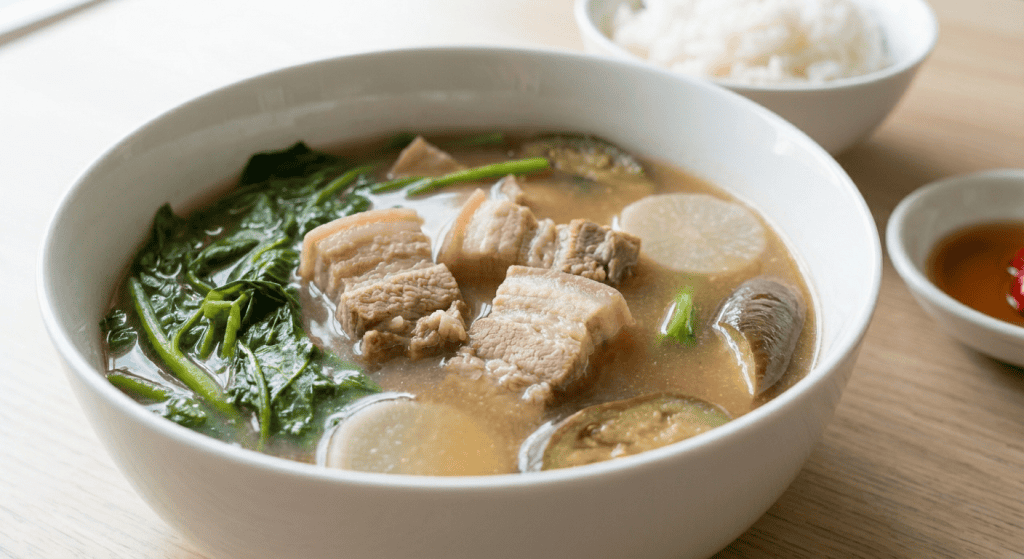
You know that one dish that immediately takes you back to your grandmother’s kitchen? For me, that’s Sinigang na Baboy. The smell of tamarind broth simmering with pork belly – honestly, nothing compares.
I learned to make this Filipino pork sour soup from my Lola when I was maybe ten years old. She’d stand at the stove, tasting the broth with that critical look on her face, adding more tamarind here, a pinch of salt there. “Mali pa,” she’d say. Still wrong. Then suddenly, her face would light up. Perfect.
Here’s the thing about Sinigang na Baboy – it’s not complicated. People get intimidated by Filipino cooking, but this recipe? It’s basically vegetables and pork in a sour broth. That’s it. The magic happens when you balance that sourness just right.
Why This Recipe Wins
This isn’t some restaurant version that costs you half your paycheck. This is home cooking – the kind that makes you feel better when you’re sick, tired, or just missing home.
The sourness cuts through rich pork belly fat. The vegetables stay crisp enough to have texture. And that broth? You’ll want to drink it straight from the bowl. I won’t judge.
Plus, you can make this in about 90 minutes. Most of that is just letting things simmer while you catch up on your shows or scroll through your phone.
Equipment You’ll Need
Don’t overthink this part. You probably have everything already:
- One large pot or Dutch oven (4-6 quarts works)
- A sharp knife for chopping
- Cutting board
- Ladle for serving
- Slotted spoon if you want to skim the foam
That’s literally it. No fancy gadgets. No special equipment. Just regular kitchen stuff.

Ingredients You’ll Need for Sinigang na Baboy
Shopping for this is straightforward if you have an Asian grocery nearby. Regular supermarkets? You might need to hunt a bit, but it’s doable.
The Basics
- 2 lbs pork belly or pork ribs – Cut into chunks about 2 inches. Pork belly gives you that rich, fatty broth. Ribs work if you want meatier pieces.
- 8 cups water – More if you like it soupy. Less if you want it concentrated.
- 1 packet tamarind soup base (40g) – Look for Knorr or Mama Sita’s brand. Makes life easier than dealing with actual tamarind pods.
- 2 medium tomatoes – Adds depth to the broth. Don’t skip these.
- 1 large onion – Quartered. Sweetness balances the sour.
The Vegetables
- 2 cups radish (labanos) – Sliced thick. Adds a mild bite.
- 1 bunch water spinach (kangkong) – Or regular spinach if you can’t find kangkong.
- 2-3 long green peppers – Not spicy. Just flavor.
- 1 medium eggplant – Asian eggplant works best. Cut into chunks.
- 6-8 string beans – Trimmed, cut into 2-inch pieces.
The Flavor Builders
- 2-3 pieces taro root (gabi) – Optional but traditional. Makes the broth slightly thicker.
- 2 tablespoons fish sauce – This is your salt. Add gradually.
- Salt and pepper – To taste, obviously.

How I Make Sinigang na Baboy
Alright, let’s cook. Put on some music or a podcast because the first part is just waiting.
Step 1: Boil That Pork
Throw your pork pieces into the pot with 8 cups of water. Bring it to a boil. You’ll see this gross-looking foam rise to the top – that’s the impurities. Skim it off with a spoon. My Lola was obsessive about this part. “Clear broth, clear mind,” she’d say. I still don’t know what that means, but I skim anyway.
Once you’ve removed most of the foam, add your onions and tomatoes. Lower the heat to medium-low and let it simmer for about 45 minutes. Maybe an hour if you’re using ribs. You want the pork tender enough that it almost falls apart.
Step 2: Add Your Hard Vegetables
After the pork is tender, add your radish and taro root first. These take longer to cook. Give them about 10 minutes to soften up a bit. The broth should be smelling really good by now.
Step 3: The Sour Comes In
This is the moment of truth. Add your tamarind soup base. Stir it well until it dissolves completely. Taste the broth. Too sour? Add a bit more water. Not sour enough? Add more tamarind base gradually.
I remember the first time I made this alone, I dumped the whole packet in at once. It was so sour my face puckered up like I’d bitten a lemon. Lesson learned – go slow, taste often.
Step 4: Everything Else Goes In
Add your eggplant and string beans. Let them cook for about 5 minutes. Then drop in your green peppers and kangkong last. These cook fast – maybe 2-3 minutes tops. You want the kangkong wilted but still bright green.
Step 5: Season and Serve
Add fish sauce bit by bit. Taste after each addition. Season with salt and pepper if needed. Turn off the heat and let it sit for a minute.
Serve it hot over steamed white rice. That’s non-negotiable. Sinigang without rice is just sad soup.
Tips That Make a Difference
Here’s what I’ve learned after making this probably a hundred times:
Don’t overcook the vegetables. Nobody wants mushy kangkong. Add them last and cook just until done.
Use real tamarind if you’re feeling ambitious. Soak about 100g of tamarind pulp in warm water, mash it, strain out the seeds. It’s more work but the flavor is deeper.
The fat is not your enemy. That layer of oil floating on top? That’s flavor. You can skim some if you want, but leave most of it.
Make it spicier with bird’s eye chili. Just drop a few in whole. They’ll add heat without overwhelming the sour.
Leftovers taste better the next day. The flavors meld together overnight. Just don’t reheat the vegetables too much or they’ll turn to mush.
Easy Variations of This Sinigang Recipe
Once you nail the basic version, try these switches:
Sinigang na Baboy with Miso
Add 2 tablespoons of miso paste when you add the tamarind. Gives it this rich, umami depth that’s ridiculously good.
Different Meats
Swap pork for shrimp, fish, or beef. Cooking times change – shrimp only needs like 3 minutes, so add it at the very end.
Vegetable Mix-Ups
No kangkong? Use bok choy or spinach. Can’t find radish? Turnips work. Missing eggplant? Add more tomatoes or okra.
Extra Tangy Version
Mix tamarind base with a squeeze of calamansi or lime juice. That citrus note really brightens everything up.
Storage and Reheating Advice
Store leftovers in an airtight container in the fridge. It’ll keep for 3-4 days easily.
When reheating, do it gently over medium-low heat. Don’t boil it hard or the vegetables will disintegrate. If the broth has thickened too much, add a splash of water.
Can you freeze it? Technically yes, but the vegetables won’t survive well. If you’re planning to freeze, maybe skip adding the kangkong and green peppers. Add fresh ones when you reheat.
I usually make a big batch Sunday and eat it through Wednesday. By Thursday, I’m ready for something else, but those first few days? Pure comfort.
Frequently Asked Questions About Sinigang na Baboy
What makes Sinigang na Baboy sour?
The tamarind gives it that signature sour taste. You can use fresh tamarind, tamarind paste, or the convenient soup base packets. Some regions use other souring agents like green mango or kamias, but tamarind is the classic choice.
Can I make this less sour?
Absolutely. Just use less tamarind base or add more water to dilute it. Start with half the packet, taste, then add more if needed. You’re in control here.
What cut of pork works best for Sinigang?
Pork belly is my favorite because the fat makes the broth rich. Pork ribs work great if you want meatier pieces. Some people use pork shoulder – it’s leaner but still gets tender. Avoid super lean cuts because they’ll dry out.
Do I need to use all those vegetables?
Nope. Use what you have or what you like. The core is really the pork, tamarind, and tomatoes. Everything else is flexible. My cousin hates eggplant so she leaves it out. The food police won’t come after you.
Why is my broth cloudy?
Usually because you didn’t skim the foam at the beginning. It’s not a big deal taste-wise, but skimming gives you that clear, cleaner-looking broth. Also, if you boil it too hard, it can get cloudy. Keep it at a gentle simmer.
A Final Note on Making Sinigang na Baboy
Here’s what I want you to know – this recipe isn’t precious. You’re not going to ruin it if you use a different vegetable or add a bit more water. Filipino home cooking is flexible like that.
The best Sinigang na Baboy is the one you’ll actually make. Don’t stress about finding the exact eggplant variety or using fresh tamarind when packets work fine. Make it yours.
When I moved away from home, this was the first dish I learned to cook. I’d call my mom from the grocery store asking which tamarind brand to buy, how much pork to get, whether I really needed the gabi. She’d laugh and say, “Just try it. You’ll figure it out.”
She was right. After a few batches, you develop a feel for it. You’ll know when the sourness is just right, when the pork is tender enough, when to stop adding vegetables.
So grab your pot and give it a shot. Worst case? You learn what not to do next time. Best case? You’ve got a pot of comforting, sour, delicious soup that’ll last you half the week.
And hey, if you’re feeling generous, make extra and share some with a friend. That’s what my Lola would do. She’d cook a huge pot and send containers home with anyone who visited. Food tastes better when you share it.
*This post may contain affiliate links which means I may earn commissions for purchases made through links at no extra cost to you. See https://asianfoodsdaily.com/disclaimer/* for more infomation
Post your Comment
0 Comments
No comments yet. Be the first to share your thoughts!