How To Make Spicy Delicious Kimchi Jjim At Home
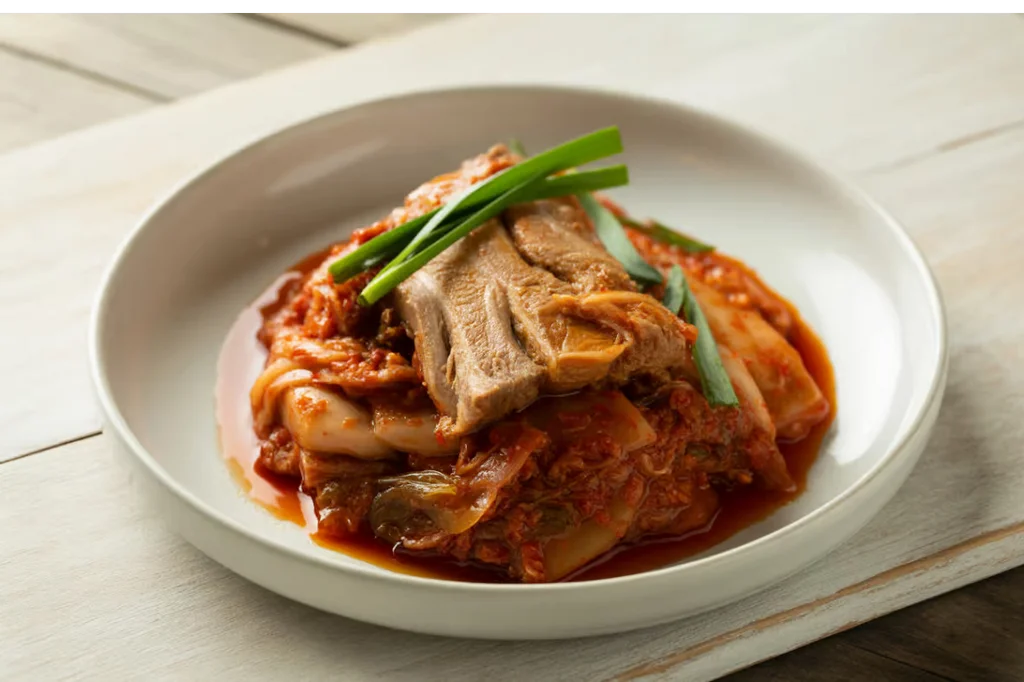
I still remember the first time I tried Kimchi Jjim. It was at a small Korean restaurant tucked away in a quiet corner of my city. The moment the steaming pot arrived at my table, I was hit with an irresistible aroma—spicy, tangy, and deeply savory. One bite, and I was hooked. The tender pork, the rich kimchi, and that perfect balance of heat and umami were unlike anything I’d ever tasted. I knew right then that I had to learn how to make this dish at home.

Fast forward to today, and Kimchi Jjim has become one of my go-to comfort foods, especially on chilly evenings when I need something warm and satisfying. The best part? It’s surprisingly easy to make, even if you’re not a pro in the kitchen. Trust me, once you make this at home, you’ll never look at kimchi the same way again.
What is Kimchi Jjim?
For those who might be new to Korean cuisine, Kimchi Jjim is a traditional dish where kimchi is braised with meat—usually pork—and other ingredients like tofu or vegetables. The result is a rich, spicy stew that’s packed with flavor. The kimchi, already fermented and tangy, becomes even more mellow and complex as it simmers, while the pork (or your protein of choice) soaks up all that deliciousness.
It’s the kind of dish that warms you from the inside out, perfect for sharing with family or friends. And while it might sound intimidating, I promise it’s totally doable at home with just a few simple ingredients.
Ingredients You’ll Need
Most of these ingredients are easy to find, especially if you have an Asian grocery store nearby. If not, I’ll share substitution tips later on.
Here’s what you’ll need:
- 1 pound of pork belly or pork shoulder, cut into bite-sized pieces (you can also use beef or chicken)
- 2 cups of kimchi, chopped (older kimchi works best—it’s more flavorful!)
- 1 onion, sliced
- 2 green onions, chopped
- 1 tablespoon of gochugaru (Korean red pepper flakes)
- 1 tablespoon of gochujang (Korean red pepper paste)
- 1 tablespoon of soy sauce
- 1 tablespoon of sugar
- 1 teaspoon of sesame oil
- 2 cups of water or broth (chicken or vegetable broth adds extra depth)
- Optional: tofu, mushrooms, or veggies like potatoes or zucchini
Preparation: Let’s Get Cooking!
Now that you have your ingredients, it’s time to start cooking. I’ve broken this down into simple steps so you can follow along easily. Feel free to tweak the spice level—this is your Kimchi Jjim, after all!
Step 1: Prep the Ingredients
- Cut the pork into bite-sized pieces. If you’re using pork belly, leave some fat on for richness.
- Chop the kimchi into smaller pieces to help it cook down.
- Slice the onion and chop the green onions. Set everything aside.
Step 2: Brown the Pork
- Heat a little oil in a large pot or Dutch oven over medium heat.
- Add the pork and cook until it’s browned on all sides. Don’t skip this step—it adds a ton of flavor. Let the pork get a nice sear!
Step 3: Add the Kimchi and Onions
- Once the pork is browned, toss in the chopped kimchi, sliced onion, and green onions.
- Stir everything together to let the flavors mingle.
Step 4: Make the Sauce
- In a small bowl, mix the gochugaru, gochujang, soy sauce, sugar, and sesame oil. This is your flavor bomb!
- Pour the sauce over the pork and kimchi mixture, stirring to coat evenly.
Step 5: Simmer
- Add the 2 cups of water or broth and bring it to a boil.
- Once boiling, reduce the heat to low, cover the pot, and simmer for 30-40 minutes. This is where the pork gets tender and the kimchi transforms into a rich stew.
- If you’re adding tofu or veggies, toss them in during the last 10 minutes.
Tips and Variations
Here are some personal tricks I’ve learned to make your Kimchi Jjim even better:
- Older kimchi is key: The tangier it is, the deeper the flavor. I always save my oldest jar for this dish.
- Spice it your way: Too spicy? Cut back on the gochugaru or gochujang. Love heat? Add more!
- Go vegetarian: Skip the pork and use tofu or mushrooms. It’s still deliciously savory.
- Add potatoes: For a heartier meal, throw in cubed potatoes or sweet potatoes—they soak up the sauce like a dream.
- Broth boost: Homemade broth takes it up a notch, but store-bought works just fine.
Serving Suggestions
Kimchi Jjim is best served hot, straight from the pot. Here’s how I enjoy it:
- With steamed rice: Short-grain white rice is my favorite—it balances the spice perfectly.
- Banchan on the side: Pair it with pickled veggies, a simple salad, or Korean pancakes if you’re feeling fancy.
- A cold drink: The spice can kick, so keep a glass of water or a light beer handy.
Why You’ll Love Making Kimchi Jjim at Home
There’s something so satisfying about making Kimchi Jjim from scratch. Maybe it’s the way the house fills with that unmistakable kimchi aroma, or the anticipation as it simmers. For me, it’s the perfect dish for a lazy weekend when I can let it cook slowly and warm up the kitchen.
It’s also a great way to use up leftover kimchi. I always feel a little proud turning a jar of kimchi into a hearty meal that could feed a crowd—or just me for a few days! Plus, there’s nothing like mastering a dish that seems exotic but is actually super approachable. Once you try this, you’ll see that Korean cooking is all about bold flavors and simple techniques.
Final Thoughts: Give It a Try!
Making Spicy Delicious Kimchi Jjim at home is easier than you think, and the results are so worth it. With a handful of ingredients and a little patience, you can whip up a dish that’s sure to impress. Whether you’re a kimchi fanatic or new to Korean cuisine, this recipe is a fantastic starting point.
So, grab some kimchi, fire up the stove, and get cooking. I promise you won’t regret it. Have you tried Kimchi Jjim before? What’s your favorite twist? Drop a comment below—I’d love to hear from you!
*This post may contain affiliate links which means I may earn commissions for purchases made through links at no extra cost to you. See https://asianfoodsdaily.com/disclaimer/* for more infomation
Post your Comment
0 Comments
No comments yet. Be the first to share your thoughts!