How to Make Filipino Lechon- Roasted Pork
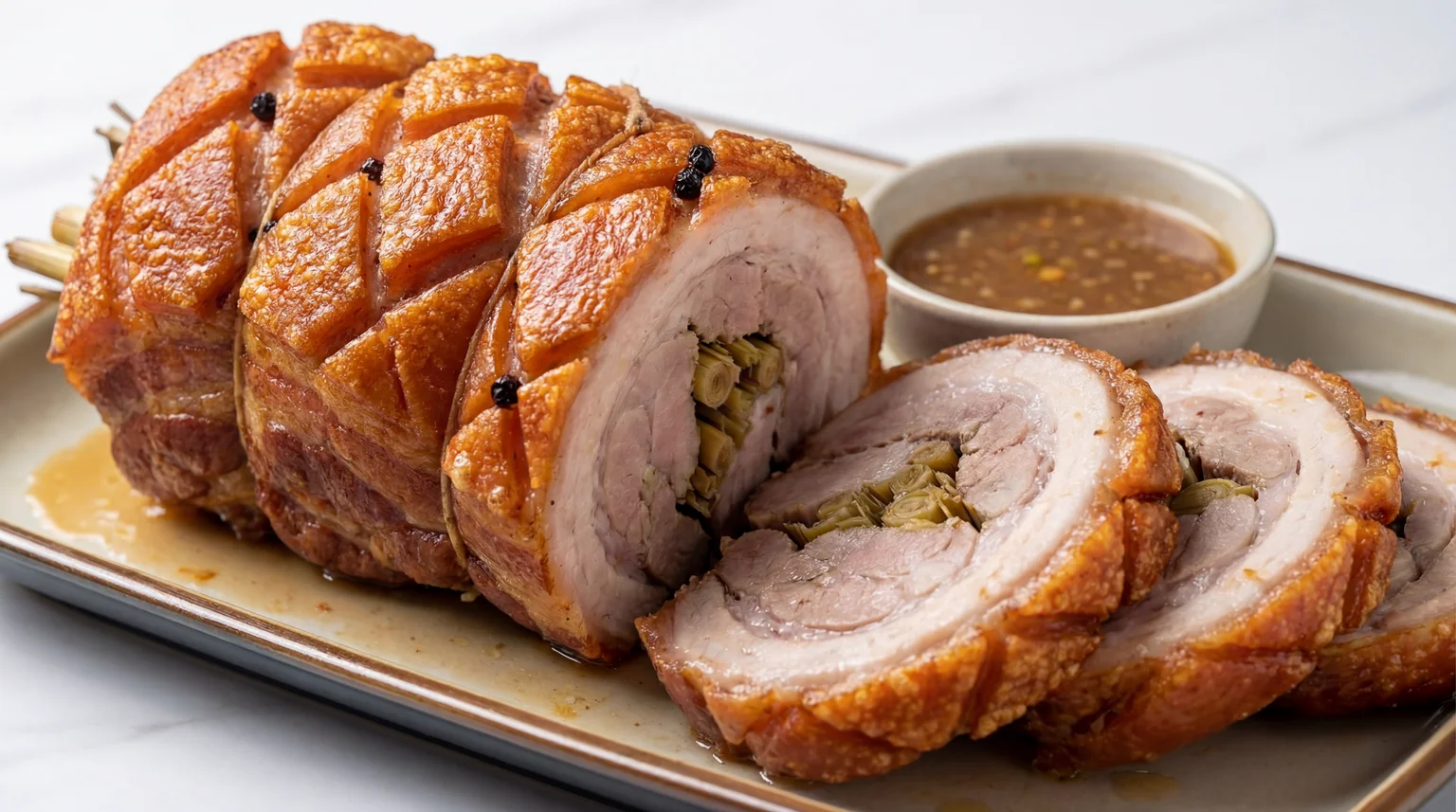
Want that impossibly crispy skin and juicy meat that makes Filipino Lechon legendary? This guide shows you exactly how to make authentic Filipino roasted pork at home—no fancy equipment required. Whether you’re cooking for a family celebration or just craving that perfect crispy lechon pork belly, you’re in the right place.
My Lechon Story: A Kitchen Disaster That Changed Everything
Let me tell you about the first time I tried making Filipino Lechon for my lola’s 80th birthday. Complete disaster. The skin was chewy. The meat was dry. My tita gave me that look—you know the one.
But my lolo? He just laughed, grabbed a piece anyway, and said “Anak, the best lechon I ever made looked worse than this.” He then spent the next hour teaching me his secrets. The ones his father taught him back in Cebu. Those tips are what I’m sharing today.
That birthday? We ended up ordering Jollibee. But every celebration since then? My lechon takes center stage.
Why This Filipino Lechon Recipe Wins
This step by step lechon cooking guide works because it focuses on three things that actually matter:
- Skin preparation – Dry skin = crispy skin. Period.
- The right aromatics – Lemongrass and garlic do the heavy lifting
- Temperature control – Low and slow, then blast it with high heat at the end
Most recipes skip the drying step. Big mistake. That’s the difference between crackling that shatters and skin that’s just… there.
Ingredients You’ll Need for Authentic Filipino Lechon

For the Pork
- 5-6 lb pork belly, skin on – The canvas for your crispy lechon pork belly masterpiece
- Coarse sea salt – Draws out moisture, seasons deep into the meat
For the Best Lechon Marinade and Stuffing
- 1 head garlic, crushed – The backbone of Filipino flavor
- 4 stalks lemongrass, bruised – That signature citrus punch
- 6 bay leaves – Earthy depth without overpowering
- 2 tbsp whole black peppercorns – Subtle heat throughout
- 1 large onion, quartered – Sweetness that balances the salt
- 2 cups coconut water or pineapple juice – Keeps things moist inside
- 3 tbsp soy sauce – Umami boost
- 2 tbsp fish sauce – Don’t skip this. Trust me.

For the Sauce
- 1 cup liver spread or mashed chicken liver
- ½ cup vinegar
- ½ cup brown sugar
- Salt and pepper to taste
Equipment for Making Lechon at Home
You don’t need a whole roasting pit. Here’s what actually works for easy lechon asado at home:
- Large roasting pan with rack – Air circulation underneath is crucial
- Kitchen twine – For rolling and securing
- Meat thermometer – Your best friend here. 165°F internal, no guessing
- Sharp knife – Score that skin properly
- Paper towels – You’ll use more than you think
- Fan or hair dryer (cool setting) – Speed up the drying process
How I Make Filipino Lechon: Step by Step Instructions

Day Before: Prep and Dry
Step 1: Score the skin in a crosshatch pattern. Go deep enough to hit the fat but don’t puncture the meat. About ¼ inch cuts, spaced 1 inch apart.
Step 2: Flip it over. Rub the meat side generously with your crushed garlic, salt, pepper, soy sauce, and fish sauce. Really massage it in there.
Step 3: Lay the lemongrass, bay leaves, onion, and peppercorns down the center. Pour some coconut water over everything.
Step 4: Roll it up tight. Tie with kitchen twine every 2 inches. Make it snug.
Step 5: Here’s the secret my lolo taught me—rub coarse salt all over the skin. Pat it dry. Then put it uncovered in the fridge overnight. The cold air pulls moisture out. That’s your crispy skin foundation right there.

Roasting Day: The Main Event
Step 6: Take the pork out 1 hour before cooking. Room temperature meat cooks more evenly.
Step 7: Preheat your oven to 325°F. Low and slow first.
Step 8: Wipe off the salt from the skin. Pat dry again. (Seriously, dry skin is everything for this authentic Filipino roasted pork recipe.)
Step 9: Place on your rack, skin side up. Roast for 2.5-3 hours until internal temp hits 165°F.
Step 10: Now the magic—crank that oven to 450°F. Watch it closely. 20-30 minutes until the skin bubbles and crackles. You’ll hear it pop. That’s the sound of victory.
Step 11: Rest for 15 minutes before slicing. This part is hard. The smell is incredible. But wait anyway.
Tips That Make a Difference for Perfect Lechon with Crispy Skin
Dry, dry, dry. I can’t stress this enough. Use paper towels. Use a fan. Do whatever it takes. Wet skin steams instead of crisps.
Don’t peek too much. Every time you open the oven, you lose heat. Check at the 2-hour mark, then again near the end.
If skin isn’t crisping evenly, rotate the pan. Some ovens have hot spots.
The broiler works too. If your skin needs extra help, switch to broil for the last 5-10 minutes. Just watch it—things go from perfect to burned fast.
Easy Variations for Your Filipino Lechon
Lechon Kawali Style: Cut into chunks, deep fry instead of roasting. Different technique, same crispy goal.
Spicy Version: Add chopped bird’s eye chilies to your stuffing. My cousin does this. It’s intense but good.
Air Fryer Method: Works surprisingly well for smaller portions. 375°F, about 45 minutes for a 2-lb piece. Flip halfway.
Traditional Whole Roasted Pig Lechon: If you’re going all out with a whole pig, same principles apply. Just scale up everything and cook over charcoal for that authentic smoky flavor. Plan for 4-6 hours depending on size.
Storage and Reheating Your Filipino Lechon
Refrigerator: Keeps 3-4 days in an airtight container. Separate the crispy skin if you can—store it in a paper bag to maintain crunch.
Freezer: Up to 3 months. Wrap tightly in plastic, then foil.
Reheating: Here’s the thing—microwaving makes the skin soggy. Instead, pop it in a 400°F oven for 10-15 minutes. Skin goes back on the rack so air circulates. Gets crispy again. Almost like fresh.
Leftover lechon makes amazing fried rice. Just saying.
Filipino Lechon FAQs
What makes Filipino Lechon different from other roasted pork?
Filipino Lechon stands out because of its aromatic stuffing—lemongrass, garlic, bay leaves—and that glass-like crispy skin. The meat stays incredibly moist while the exterior shatters when you bite into it. It’s roasted whole traditionally, creating a centerpiece that’s as much about celebration as it is about flavor.
How do I get crispy lechon skin every time?
Three things: dry skin thoroughly before cooking, salt it and leave uncovered in the fridge overnight, and finish with high heat. Moisture is the enemy of crispy skin. Remove as much as possible and you’ll get that signature crackle.
Can I make authentic Filipino Lechon without a whole pig?
Absolutely. Pork belly is perfect for home cooking. You get the same flavors and that crispy skin in a manageable size. This crispy lechon pork belly recipe captures everything great about traditional lechon without needing a backyard pit.
What’s the best lechon marinade and sauce to serve with it?
The marinade itself is simple—garlic, soy sauce, fish sauce. The magic is in the stuffing. For sauce, liver-based lechon sauce (sarsa) is traditional. Mix liver spread with vinegar, sugar, and seasonings. Some prefer spiced vinegar or even just rock salt. All good choices.
How long does it take to cook Filipino Lechon at home?
For a 5-6 lb pork belly, plan for about 3-3.5 hours total. That’s 2.5-3 hours at low temperature plus 20-30 minutes of high heat for crisping. Add overnight drying time for prep. The actual hands-on work? Maybe 30 minutes.
Final Note on Making Filipino Lechon
Here’s what nobody tells you about learning how to make Filipino Lechon—your first attempt probably won’t be perfect. Mine wasn’t. Not even close.
But that’s okay. Every Filipino cook I know has a lechon fail story. It’s practically a rite of passage. The important thing is you try. You learn. You adjust.
And honestly? Even imperfect lechon tastes pretty amazing. That crispy skin, that juicy meat, those aromatics—it all comes together into something special.
So go make your lechon. Call your family over. Share the food. That’s what this dish is really about anyway—bringing people together around something delicious.
Now I want to hear from you. What’s your lechon story? Drop a comment below.
*This post may contain affiliate links which means I may earn commissions for purchases made through links at no extra cost to you. See https://asianfoodsdaily.com/disclaimer/* for more infomation
Post your Comment
0 Comments
No comments yet. Be the first to share your thoughts!