How to Make Authentic Vietnamese Rice Paper Rolls
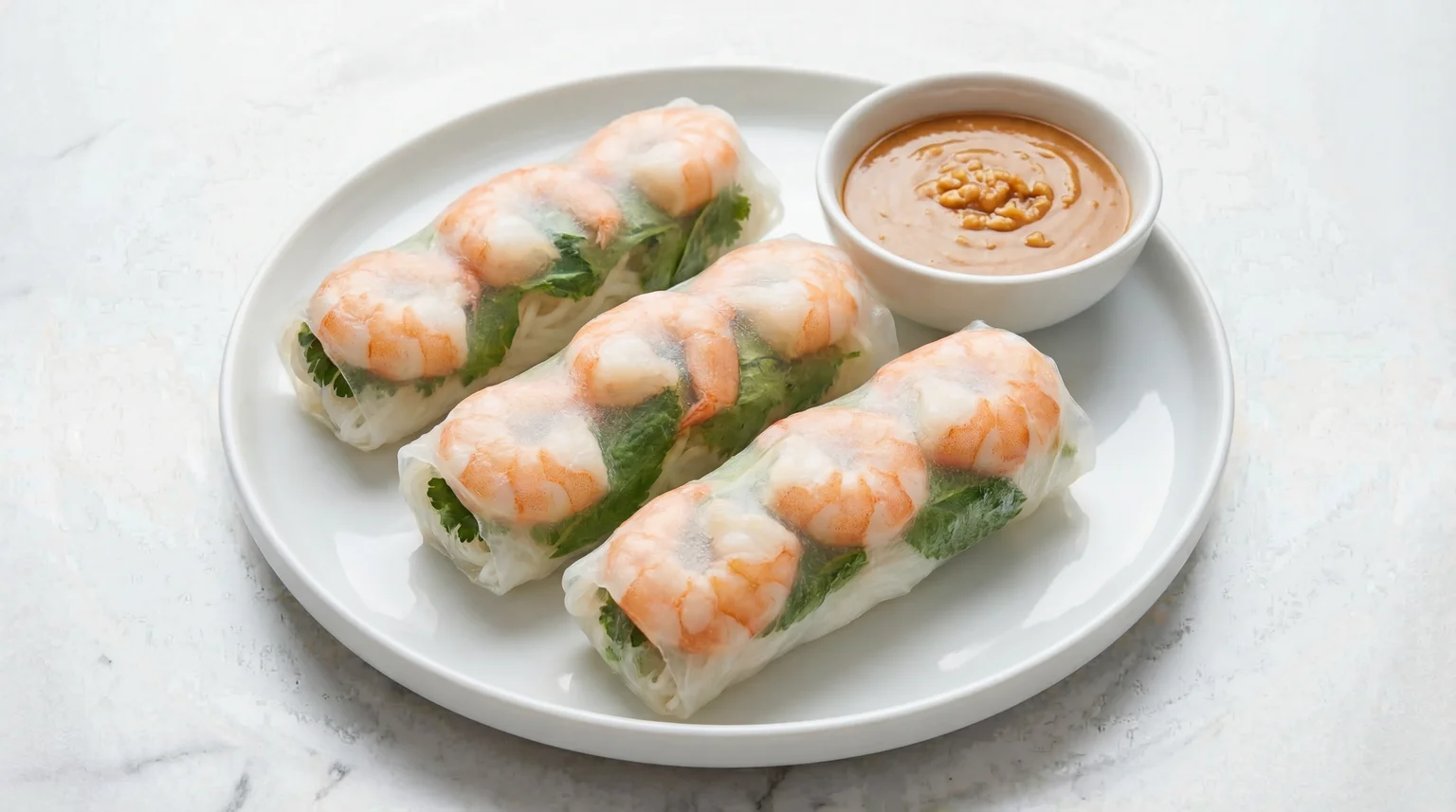
Vietnamese rice paper rolls (Gỏi Cuốn) are fresh, healthy spring rolls made with translucent rice paper wrappers filled with vermicelli noodles, fresh herbs, vegetables, and protein like shrimp or pork. Unlike fried spring rolls, these are served fresh at room temperature with peanut dipping sauce.
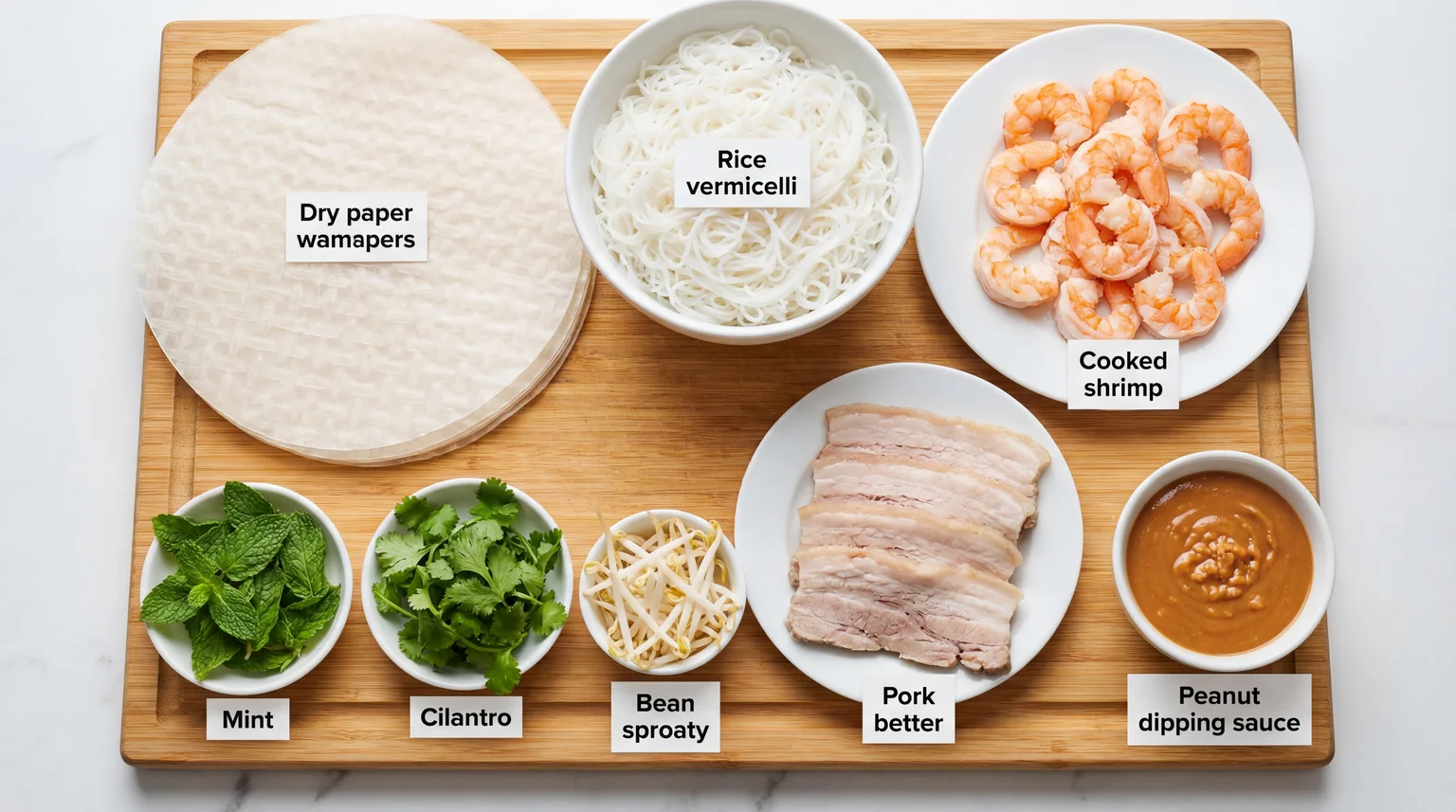
What You’ll Need for Vietnamese Rice Paper Rolls
Essential Ingredients
Rice Paper & Base:
- 16-20 rice paper rounds (bánh tráng), 22cm diameter
- 200g rice vermicelli noodles (bún)
Protein Options (Choose 1-2):
- 500g large shrimp, peeled and deveined
- 300g pork belly or shoulder, thinly sliced
- 200g grilled chicken breast
- 150g firm tofu (vegetarian option)
Fresh Vegetables & Herbs:
- 1 large head butter lettuce or green leaf lettuce
- 1 cucumber, julienned into thin strips
- 2 medium carrots, julienned
- 100g bean sprouts (optional)
Essential Herb Bundle:
- 1 large bunch fresh cilantro
- 1 large bunch fresh mint
- 1 large bunch Thai basil
- 1 bunch garlic chives or scallions
For the Peanut Dipping Sauce (Nước Chấm)
- 3 tablespoons hoisin sauce
- 2 tablespoons natural peanut butter
- 1 tablespoon rice vinegar
- 1 teaspoon sriracha or chili garlic sauce
- 2-3 tablespoons warm water
- 2 tablespoons crushed roasted peanuts
- 1 clove garlic, minced
How to Make Vietnamese Rice Paper Rolls: Step-by-Step Instructions
Step 1: Prepare All Ingredients (Mise en Place)
Cook the Protein:
- For shrimp: Bring a pot of salted water to boil. Add shrimp and cook for 2-3 minutes until pink and opaque. Immediately transfer to ice water. Once cooled, slice each shrimp in half lengthwise.
- For pork: Boil pork slices in water with a pinch of salt for 15-20 minutes until fully cooked. Let cool, then slice thinly.
Prepare the Noodles: Cook rice vermicelli according to package directions (usually 3-4 minutes in boiling water). Drain, rinse with cold water, and toss with a small amount of oil to prevent sticking.
Prep the Vegetables:
- Wash and dry all lettuce leaves
- Julienne cucumber and carrots into matchstick-sized pieces
- Wash and dry all fresh herbs, removing thick stems
- Arrange everything on a large platter for easy assembly
Step 2: Set Up Your Rolling Station
This is the key to success:
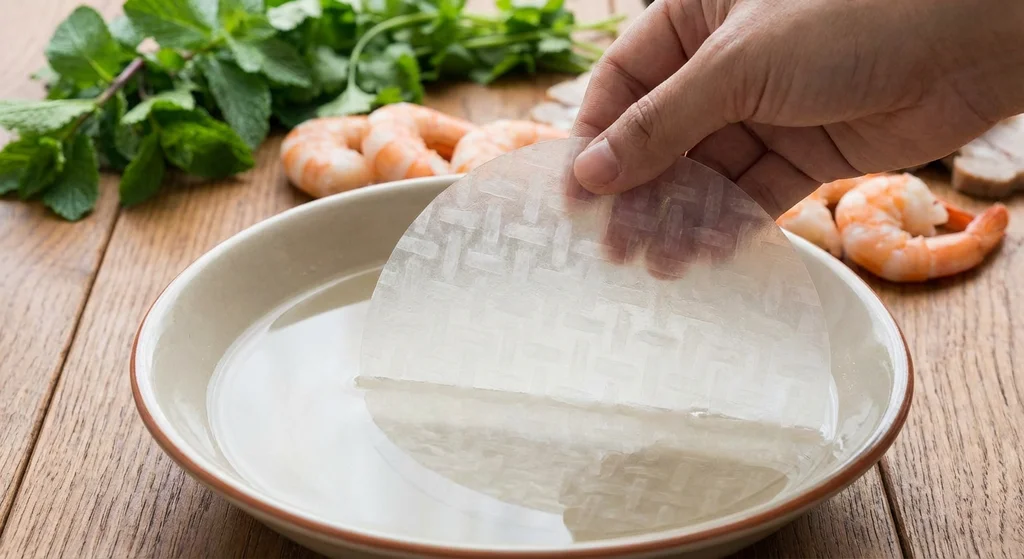
- Fill a large, shallow dish (like a pie plate) with warm water
- Place a clean, damp kitchen towel on your work surface
- Arrange all prepared ingredients within arm’s reach
- Have a serving platter ready for finished rolls
Step 3: Soften the Rice Paper Properly
Critical technique: Dip one rice paper round in warm water for 2-3 seconds only—just until it begins to soften but still feels slightly stiff. It will continue to soften as you work.
Lay the dampened rice paper on your damp towel. It should become pliable within 10-15 seconds.
Step 4: Fill Your Rice Paper Roll
Layer from bottom to top (closest to you):
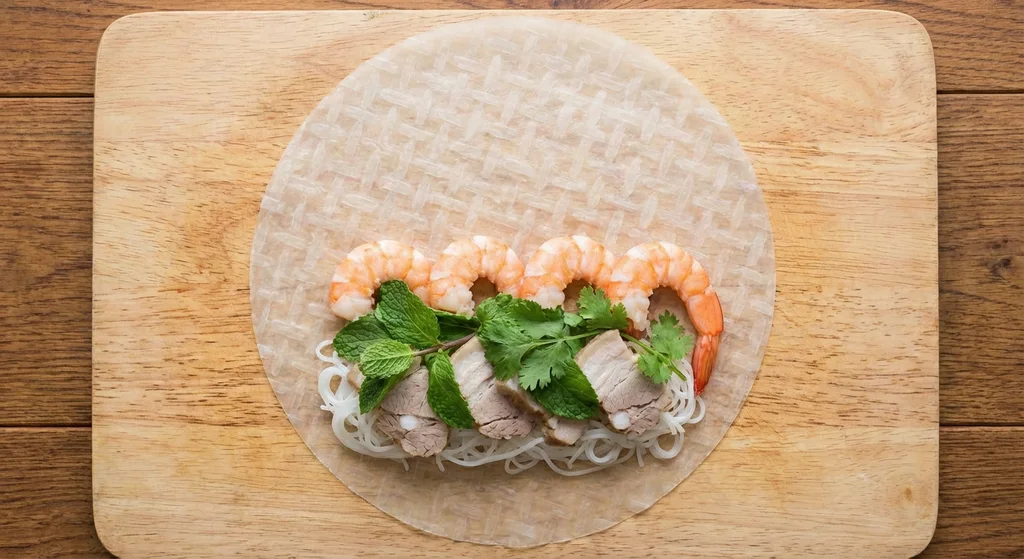
- Place 1-2 lettuce leaves in the lower third of the rice paper, leaving 2-3cm from the bottom edge
- Add a small handful of vermicelli noodles on the lettuce
- Layer 2-3 pieces of your chosen protein
- Add 3-4 strips each of cucumber and carrot
- Place 3-4 sprigs each of mint, cilantro, and Thai basil
Portion control tip: Use less filling than you think. Overfilling is the #1 mistake beginners make.
Step 5: Roll Tightly and Neatly
The rolling technique:
- Fold the bottom edge of the rice paper up and over the filling
- Fold both left and right sides inward (like a burrito)
- Continue rolling tightly away from you, keeping the sides tucked in
- For shrimp rolls: Before completing the final roll, place 2-3 shrimp halves (pink side down) on the wrapper, then finish rolling so the shrimp shows through the translucent paper
Pro tip: Keep constant, gentle pressure while rolling to ensure a tight, neat cylinder.
Step 6: Make the Peanut Dipping Sauce
- In a small bowl, whisk together hoisin sauce and peanut butter
- Add rice vinegar and sriracha
- Gradually add warm water until you reach a pourable but not watery consistency
- Stir in minced garlic
- Transfer to serving bowls and top with crushed peanuts
Common Questions About Vietnamese Rice Paper Rolls
How do you keep rice paper rolls from sticking together?
Arrange finished rolls on a platter lined with lettuce leaves, ensuring they don’t touch each other. Cover with a damp paper towel and plastic wrap if storing. They can sit at room temperature for 1-2 hours or refrigerate for up to 4 hours.
Why do my rice paper rolls tear?
The three most common causes are: (1) soaking the rice paper too long, making it too fragile; (2) overfilling the rolls; (3) using rice paper that’s old or stored in humidity. The wrapper should feel slightly firm when you start rolling—it will continue to soften.
Can you make rice paper rolls ahead of time?
Yes, but with precautions. Make them 2-4 hours before serving and store properly covered in the refrigerator. Don’t make them more than 6 hours ahead, as the rice paper becomes tough and chewy. They’re best served within 2 hours of making.
What’s the difference between rice paper rolls and spring rolls?
Vietnamese rice paper rolls (Gỏi Cuốn) are fresh and uncooked (except the protein), served at room temperature. Spring rolls are typically fried. In Vietnam, fried spring rolls are called chả giò in the South or nem rán in the North.
Do you eat Vietnamese rice paper rolls hot or cold?
Authentic Vietnamese rice paper rolls are served at room temperature or slightly chilled, never hot. The fresh herbs and vegetables are meant to be crisp and cool, providing a refreshing contrast to the warm dipping sauce.
What can I substitute if I can’t find Thai basil?
Regular sweet basil works, though the flavor is different. Thai basil has a distinctive anise-like flavor. Alternatives include: adding a few extra mint leaves, using perilla leaves (if available at Asian markets), or simply increasing the cilantro and mint proportions.
Expert Tips for Perfect Rice Paper Rolls (From 15+ Years Making Them)
Temperature matters: Use warm (not hot) water for soaking rice paper. Cold water takes too long; hot water makes the paper tear easily.
The two-second rule: Don’t oversoak. The rice paper should still feel slightly firm when you remove it from water. I learned this from my Vietnamese neighbor who makes these weekly for her family.
Assembly line method: When making rolls for a group, prepare all ingredients first, then roll all at once. This keeps them fresh and saves time.
The herb ratio: Authentic Vietnamese rolls are generous with herbs—they should be approximately 40% of the filling. Don’t skimp on the mint and cilantro.
Rice paper brand matters: Look for Three Ladies Brand (Ba Co Gai) or Red Rose Brand at Asian markets. These have the best texture and translucency. Check the ingredient list—it should only contain rice flour, water, and salt.
Keep practice rolls: Your first few rolls might be messy. That’s normal. By the fourth or fifth roll, you’ll develop the feel for it. The “ugly” rolls still taste delicious.
Nutritional Benefits
Vietnamese rice paper rolls are exceptionally healthy:
- Low calorie: 100-150 calories per roll (depending on filling)
- High in fresh vegetables and herbs: Rich in vitamins A, C, and antioxidants
- Lean protein: Shrimp and chicken provide protein without excess fat
- Gluten-free: Rice paper and rice noodles are naturally gluten-free
- Light and digestible: Perfect for hot weather or when you want something fresh
According to the USDA FoodData Central, fresh herbs like mint and cilantro provide essential nutrients while adding negligible calories, making these rolls an ideal choice for nutrient-dense eating.
Serving Suggestions
Traditional presentation: Arrange rolls on a platter with lettuce leaves between layers. Serve with peanut sauce in individual small bowls. Add lime wedges and extra herbs on the side.
Make it a meal: Pair with Vietnamese iced coffee (cà phê sữa đá) and a light soup like canh chua (sweet and sour soup).
Party-friendly: Set up a DIY rice paper roll station. Guests love assembling their own rolls with their preferred fillings.
Storage and Meal Prep
Short-term storage (2-4 hours): Arrange rolls on a plate, cover with damp paper towels, then wrap tightly with plastic wrap. Refrigerate.
What NOT to do:
- Don’t freeze rice paper rolls—the texture becomes rubbery
- Don’t stack rolls directly on top of each other
- Don’t store with the dipping sauce already applied
Make-ahead strategy: Prepare all ingredients the night before. Store proteins, noodles, and vegetables in separate airtight containers. Assemble rolls the day of serving.
Variations to Try
Grilled lemongrass pork rolls: Marinate pork in lemongrass, fish sauce, and garlic before grilling.
Crispy spring roll hybrid: Add crispy fried wonton strips inside for textural contrast.
Mango summer rolls: Add thin slices of fresh mango for a sweet-savory combination.
Fully vegetarian: Use marinated tofu, avocado, and extra vegetables.
Why This Recipe Works
This recipe is based on authentic Vietnamese techniques I learned from Vietnamese friends and through multiple trips to Vietnam. The key differences from many Western adaptations:
- Generous herbs: Authentic versions use significantly more fresh herbs than typical American recipes
- Proper rice paper hydration: Most recipes oversoak the wrappers
- Traditional dipping sauce: The balance of hoisin, peanut butter, and heat matches what you’d find in Vietnamese homes and street stalls
- Room temperature serving: Many Western restaurants serve these too cold from refrigeration
I’ve made these rolls hundreds of times over 15 years, refining the technique through trial and error, and adjusting based on feedback from Vietnamese friends who grew up eating these weekly.
Frequently Searched Questions
“How long to soak rice paper for spring rolls?” 2-3 seconds in warm water until it just begins to soften. It continues softening as you work.
“What kind of rice paper for Vietnamese rolls?” Look for 22cm round bánh tráng at Asian markets. Three Ladies Brand (Ba Co Gai) is the gold standard.
“Can you eat rice paper raw?” Yes—rice paper is already cooked during manufacturing. You’re simply rehydrating it with water before rolling.
📋 Print-Friendly Recipe Card
Vietnamese Rice Paper Rolls (Gỏi Cuốn)
Cuisine: Vietnamese | Prep Time: 30 minutes | Total Time: 30 minutes | Servings: 12-16 rolls (4-6 people)
Ingredients
Wrappers & Noodles:
- 16-20 rice paper rounds (22cm diameter)
- 200g rice vermicelli noodles
Protein (Choose 1-2):
- 500g large shrimp, peeled and deveined
- 300g pork belly/shoulder, thinly sliced
- 200g grilled chicken breast
- 150g firm tofu (vegetarian)
Fresh Vegetables:
- 1 head butter lettuce
- 1 cucumber, julienned
- 2 carrots, julienned
- 100g bean sprouts (optional)
Fresh Herb Bundle:
- 1 bunch cilantro
- 1 bunch mint
- 1 bunch Thai basil
- 1 bunch garlic chives
Peanut Dipping Sauce:
- 3 tbsp hoisin sauce
- 2 tbsp peanut butter
- 1 tbsp rice vinegar
- 1 tsp sriracha
- 2-3 tbsp warm water
- 2 tbsp crushed roasted peanuts
- 1 garlic clove, minced
Instructions
- Prep protein: Boil shrimp 2-3 minutes until pink; transfer to ice bath. Slice in half lengthwise. (Or boil pork 15-20 minutes, cool, slice thin)
- Cook noodles: Boil rice vermicelli 3-4 minutes. Drain, rinse with cold water, toss with small amount of oil.
- Prep vegetables: Wash lettuce. Julienne cucumber and carrots. Wash herbs, remove thick stems. Arrange on platter.
- Set up station: Fill shallow dish with warm water. Place damp towel on work surface. Arrange ingredients within reach.
- Soften rice paper: Dip one round in warm water for 2-3 seconds only. Lay on damp towel; wait 10-15 seconds until pliable.
- Fill roll: In lower third of rice paper, layer: 1-2 lettuce leaves, small handful noodles, 2-3 pieces protein, 3-4 strips cucumber and carrot, 3-4 sprigs each herb.
- Roll tightly: Fold bottom edge over filling. Fold sides inward. Roll tightly away from you, keeping sides tucked. (For shrimp rolls: place shrimp halves pink-side down before final roll)
- Make sauce: Whisk hoisin and peanut butter. Add vinegar and sriracha. Gradually add water to pourable consistency. Stir in garlic. Top with crushed peanuts.
- Serve: Arrange rolls on platter (don’t let them touch). Serve with peanut sauce.
Notes
- Critical tip: Don’t oversoak rice paper—just 2-3 seconds
- Common mistake: Overfilling makes rolling difficult
- Best served: Within 2 hours; can refrigerate covered up to 4 hours
- Storage: Place lettuce leaves between rolls; cover with damp towel and plastic wrap
- Calories: 100-150 per roll
Expert Tips from 15+ Years Making These
- Use warm (not hot) water for soaking
- Rice paper should feel slightly firm when starting to roll
- Use generous herbs—40% of filling
- Look for Three Ladies Brand (Ba Co Gai) rice paper
- First few rolls will be messy—by roll 4-5 you’ll get the feel
Recipe Summary Card
Vietnamese Rice Paper Rolls (Gỏi Cuốn)
⏱ Prep: 30 min | ⏱ Total: 30 min | 🍽 Serves: 4-6 people (12-16 rolls) | 📊 Difficulty: Easy | 🌱 Diet: Gluten-free, customizable
What You Need:
- Rice paper rounds, vermicelli noodles
- Protein: shrimp, pork, chicken, or tofu
- Fresh vegetables: lettuce, cucumber, carrots
- Fresh herbs: mint, cilantro, Thai basil
- Peanut dipping sauce ingredients
Quick Steps:
- Cook protein and noodles; prep all vegetables and herbs
- Set up rolling station with warm water
- Soften rice paper (2-3 seconds in warm water)
- Layer filling: lettuce, noodles, protein, vegetables, herbs
- Roll tightly, folding in sides
- Serve with peanut dipping sauce
💡 Key Success Tips:
- Don’t oversoak rice paper—just 2-3 seconds
- Use less filling than you think
- Roll tightly but gently
- Use generous amounts of fresh herbs (40% of filling)
🔢 Nutrition (per roll): 100-150 calories | High in vitamins A & C | Lean protein | Fresh herbs & vegetables
⭐ Why This Works: Based on authentic Vietnamese techniques with proper rice paper hydration, generous herb ratios, and traditional peanut sauce balance.
*This post may contain affiliate links which means I may earn commissions for purchases made through links at no extra cost to you. See https://asianfoodsdaily.com/disclaimer/* for more infomation
How to Make Authentic Vietnamese Rice Paper Rolls
Main course25 minutes
5 minutes
30 minutes
Ingredients
- • Rice paper wrappers (12-15 sheets
- • Rice vermicelli noodles (4 oz)
- • Cooked shrimp (12 large)
- • Pork tenderloin (8 oz)
- • Lettuce leaves (1 head butter lettuce)
- • Fresh mint (1 bunch)
- • Thai basil (1 bunch)
- • Cilantro (1 bunch)
- • Carrots (2 medium)
- • Cucumber (1 large)
- • Bean sprouts (1 cup)
- • Hoisin sauce (3 tablespoons)
- • Peanut butter (2 tablespoons)
- • Water (2 tablespoons)
- • Sriracha (1 teaspoon)
- • Crushed peanuts (for garnish)
Instructions
- 1 Prep Everything First
- 2 Make Your Dipping Sauce
- 3 Set Up Your Rolling Station
- 4 The Rolling Process
- 5 The Actual Rolling
Post your Comment
0 Comments
No comments yet. Be the first to share your thoughts!