How to Make Authentic Papaya Pok Pok (Som Tam)
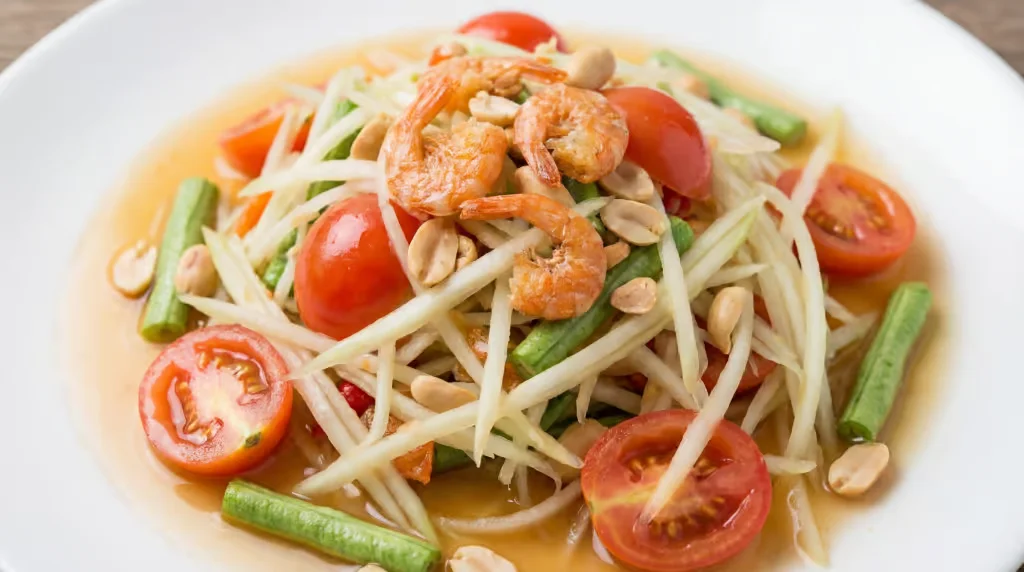
You want that perfect crunch. That balance of sour, spicy, salty, sweet that makes your mouth come alive. This post shows you how to make traditional Papaya Pok Pok at home—the way it’s actually done in Thailand, with a mortar and pestle and the right ingredients.
Three years ago in Chiang Mai, I watched a street vendor named Auntie Noi make papaya pok pok from her cart. She caught me staring and waved me over. “You try,” she said, handing me the pestle. I smashed everything into paste. She laughed so hard she cried. Then she showed me the real technique—light bruising, not destruction. That lesson changed everything.

Why You’ll Love This Recipe
Most recipes get papaya pok pok wrong. They tell you to use a grater. They skip the mortar. They use white sugar instead of palm sugar. Those shortcuts kill the texture.
This step-by-step green papaya salad guide gives you the real deal. The pounding bruises the papaya just enough to soak up flavor without going mushy. You get that addictive crunch that makes som tam worth making.
The best Thai papaya salad with mortar and pestle isn’t difficult. It just needs the right technique and decent ingredients.
Ingredients You’ll Need
Here’s what goes into an easy som tam recipe with authentic ingredients.
For the Salad (Serves 2-3)
Green papaya (2 cups shredded) – Rock-hard and green. Any softness means mush.
Long beans (1/2 cup, 1-inch pieces) – Regular green beans work too.
Cherry tomatoes (1/2 cup, halved) – Adds juice and sweetness.
Thai bird’s eye chilies (3-5) – Start with 2 if heat scares you.
Garlic (2-3 cloves) – Fresh only.
Dried shrimp (2 tablespoons) – Classic Isaan-style papaya pok pok needs this salty, chewy bite.
Roasted peanuts (2 tablespoons) – Unsalted works best.

For the Dressing
Palm sugar (1.5 tablespoons) – Non-negotiable. It melts into a caramel-like syrup.
Fish sauce (2 tablespoons) – Good quality matters.
Fresh lime juice (2-3 tablespoons) – Squeeze it yourself.
The perfect balance of sweet sour salty spicy comes from adjusting these three ingredients. That’s the whole game.
Equipment I Use
You need a mortar and pestle. I use a clay mortar about 8 inches across with wooden pestle. Find these at Thai grocery stores or online for $15-25.
The wooden pestle is key—it bruises without pulverizing. Metal pestles are too aggressive.
For shredding the papaya, a julienne peeler works great. You want thin, uneven strips—not uniform like a machine would make them.
How to Make Papaya Pok Pok (Step by Step)
Making som tam with dried shrimp and peanuts takes about 15 minutes once you have everything prepped.
Step 1: Prep Your Papaya
Peel the green papaya. Cut it in half and scrape out the white seeds.
Shred it into thin strips about 3-4 inches long. Pile them in cold water while you prep everything else. This keeps them crisp.
Step 2: Pound the Aromatics
Put the garlic and chilies in your mortar. Pound them together—not grinding, just smashing until they release oil. You’ll smell it immediately.
Takes maybe 30 seconds. Don’t turn it into paste.

Step 3: Add the Dressing
Drop the palm sugar in with the garlic and chili. Pound a few times to break it up, then add the fish sauce and lime juice.
Stir with the pestle until the sugar dissolves. Taste it—it should be strong. Almost too strong. That’s correct.
Step 4: Bruise the Vegetables
Drain your papaya and shake off excess water. Add the long beans first. Give them a few light pounds.
Add half the papaya. Here’s what Auntie Noi taught me: you’re not pounding down, you’re pressing and turning. Hold the pestle at an angle and use a pressing, rolling motion while you turn the mortar.
Press. Turn. Press. Turn.
You’ll hear a soft thudding—that’s the “pok pok.” Do this for about a minute. The papaya should look slightly crushed but still have shape. Add the rest of the papaya and tomatoes and repeat.
Step 5: Add the Crunch
Toss in the dried shrimp and peanuts. Give everything a few gentle pounds to mix.
Done. Pile it on a plate. Serve with sticky rice and grilled chicken if you want the full experience.
Tips That Make a Difference
Buy the papaya green. If it has any yellow or softness, pick another one. You want it hard as wood.
Adjust as you go. Taste after mixing. Too sour? Add sugar. Too sweet? More lime. The perfect authentic papaya pok pok recipe is about balance.
Start with fewer chilies. You can always add more. You can’t take heat out.
Don’t drown it. The salad should be moist, not wet.
Recipe Variation Ideas for Som Tam
Som tam Lao (Isaan-style): Skip the peanuts and dried shrimp. Use fermented fish sauce (pla ra) instead. It’s funkier. Saltier. More intense.
Vegetarian version: Replace fish sauce with soy sauce. Skip the dried shrimp. Add extra peanuts and fried tofu.
Fruit variations: Try shredded green mango or cucumber using the same technique.
Storage and Reheating
Papaya pok pok doesn’t store well. The papaya gets soggy after a few hours.
Keep leftovers in an airtight container in the fridge for maybe 24 hours max. Don’t freeze it.
Better move: prep everything ahead. Shred the papaya and store it in water. Then pound it fresh when you want to eat. Takes 5 minutes.
You don’t reheat som tam. Serve it at room temperature or slightly cool.
FAQs
Can I make papaya pok pok without a mortar and pestle?
Technically yes, but you lose texture. Use a large bowl and a wooden muddler or rolling pin. Smash the garlic and chilies in a bag first, then mix everything and press gently. Not quite the same, but it works.
What if I can’t find green papaya?
Try Asian grocery stores—Vietnamese, Thai, Chinese, Lao markets all carry it. If you really can’t find it, shredded green mango or very firm jicama can work.
How spicy is traditional som tam?
Pretty spicy. Most Thai cooks use 4-6 bird’s eye chilies per portion. Start with 2-3 for your first try.
Can I use regular sugar instead of palm sugar?
You can, but it changes the dish. Palm sugar has deeper, almost smoky sweetness. Creates a thicker dressing that clings to the papaya. White sugar tastes sharp and thin. Palm sugar is cheap—just get some.
Why is my papaya salad watery?
Either your papaya wasn’t dry after shredding, or you pounded too hard and broke down the cell walls. Shake off water and remember to bruise, not pulverize.
Final Note
Learning to make this right took me about five tries. The first few times, I either mashed everything or under-pounded it and had bland, crunchy papaya.
Making som tam is about rhythm and feel, not precise measurements. Once you get the pok pok motion down—that press and turn—you’ll understand why people get addicted to making this dish.
When you take your first bite and get that perfect hit of sour, salty, sweet, and spicy all at once, with the crunch of papaya and peanuts—you’ll get it.
Now go find yourself a green papaya and a mortar. Your kitchen’s about to smell amazing.
*This post may contain affiliate links which means I may earn commissions for purchases made through links at no extra cost to you. See https://asianfoodsdaily.com/disclaimer/* for more infomation
Post your Comment
0 Comments
No comments yet. Be the first to share your thoughts!