Filipino Chopsuey Recipe
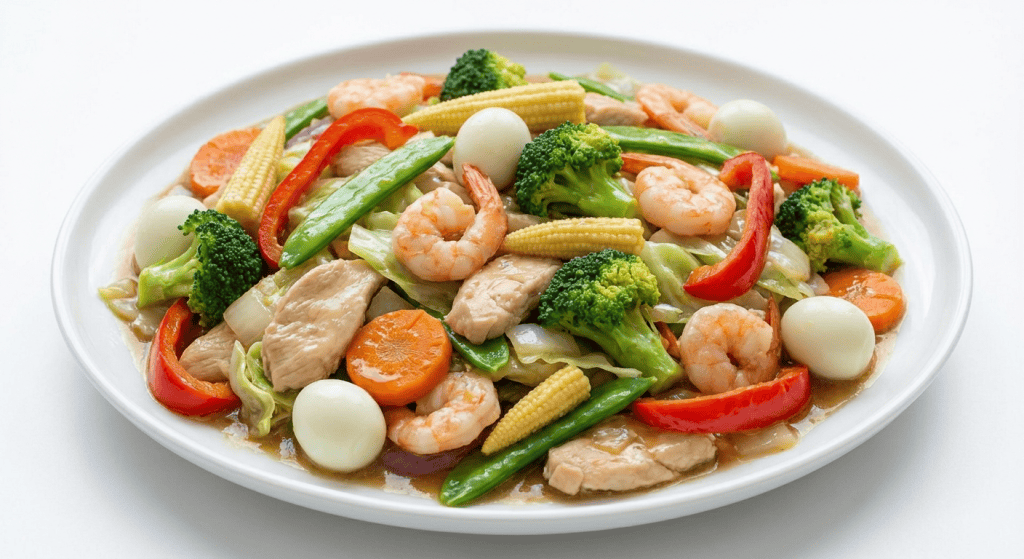
My Lola Carmen used to make this Filipino chopsuey recipe every Sunday. I’d sit on a small stool in her kitchen, watching her chop vegetables with that old cleaver she’d had for decades. She never measured anything. Just threw in whatever looked good at the market that morning. This Filipino chopsuey became my comfort food growing up. That’s how Filipino cooking works, honestly. It’s less about precision and more about feeling.
Why This Recipe Wins
This Filipino chopsuey is different from Chinese chop suey. Totally different dish, actually. Ours has more sauce, more vegetables, and we always add meat or seafood. Sometimes both.
It’s a complete meal in one pan. You get protein, vegetables, and that savory sauce that’s perfect over rice. My kids eat their veggies without complaining when I make this Filipino chopsuey recipe. That alone makes it a winner in my book.
The sauce is the secret. Sweet, savory, with a slight thickness that coats everything. No vegetable gets left behind on the plate.
Ingredients You’ll Need for Filipino Chopsuey
For the Protein:
- 200g pork belly, sliced thin (adds richness to the sauce)
- 150g shrimp, peeled (brings that seafood sweetness)

For the Vegetables:
- 1 medium carrot, sliced (adds color and slight sweetness)
- 1 cup cauliflower florets (soaks up the sauce beautifully)
- 1 cup cabbage, chopped (gives bulk and texture)
- 1 red bell pepper, sliced (bright color, mild sweetness)
- 1 cup snow peas (that fresh crunch)
- 1 cup young corn, halved (Filipino chopsuey staple)
- 5 pieces quail eggs, boiled (traditional addition, looks fancy)
For the Sauce:
- 2 cups chicken broth (the base of everything)
- 3 tbsp oyster sauce (umami depth)
- 2 tbsp soy sauce (saltiness and color)
- 1 tbsp sugar (balances the salt)
- 2 tbsp cornstarch mixed with 3 tbsp water (thickens the sauce)
Aromatics:
- 4 cloves garlic, minced
- 1 medium onion, sliced
- 2 tbsp cooking oil

Equipment
You don’t need fancy stuff for this Filipino chopsuey recipe. Just a big wok or a deep pan. Something wide enough to toss everything without making a mess. I use my old wok that’s seasoned from years of use.
A good sharp knife makes the chopping easier. You’ll also need a cutting board, measuring spoons, and a small bowl for mixing the cornstarch slurry. That’s it.
How I Make Filipino Chopsuey
Step 1: Heat your wok over medium-high heat. Add the oil. Let it get hot but not smoking.
Step 2: Toss in the pork belly slices. Cook them until they’re golden and the fat renders out. This takes about 5 minutes. Don’t rush this part. The pork fat flavors the whole dish.
Step 3: Add the garlic and onion. Stir them around until they smell amazing. Your kitchen should smell like a Filipino restaurant by now.
Step 4: Throw in the shrimp. Cook just until they turn pink. Maybe 2 minutes. Overcooked shrimp gets rubbery. Nobody wants that.
Step 5: Now for the vegetables. Start with the hard ones first. Carrots and cauliflower go in. Stir them for about 2 minutes.
Step 6: Add the cabbage, bell pepper, snow peas, and young corn. Keep everything moving in the wok. You want them cooked but still crisp.
Step 7: Pour in the chicken broth. Then add the oyster sauce, soy sauce, and sugar. Mix everything well.
Step 8: Let it simmer for 3 minutes. The vegetables should be tender but not mushy.
Step 9: Give your cornstarch slurry a quick stir. Pour it into the wok slowly, stirring as you go. The sauce will thicken up in about a minute.
Step 10: Add those quail eggs. Just warm them through. They’re already cooked.
That’s it. Serve your Filipino chopsuey hot over steamed rice.

Tips That Make This Chopsuey Recipe Better
Cut your vegetables roughly the same size. They’ll cook evenly that way.
Don’t overcrowd the wok. If your wok is small, cook in batches. Overcrowding makes vegetables steam instead of stir-fry.
Taste the sauce before you thicken it. You can always add more soy sauce or sugar. Can’t take it out once it’s in though.
Use high heat. Filipino chopsuey should have that slight char on some vegetables. That’s the flavor you’re after.
If you can’t find quail eggs, skip them. Or use regular hard-boiled eggs, quartered. Works fine.
Easy Variations for This Filipino Vegetable Recipe
Seafood Filipino Chopsuey: Skip the pork. Use shrimp, squid, and fish fillet instead. My uncle makes it this way because he doesn’t eat pork.
Chicken Version: Swap the pork for chicken breast or thighs. Cut them small so they cook fast.
Vegetarian Chopsuey: Leave out the meat and shrimp entirely. Add more mushrooms and maybe some tofu. Use vegetable broth instead of chicken broth.
Extra Spicy: Add sliced red chilies with the garlic. Or drizzle some chili oil on top when serving.
Budget-Friendly: Use whatever vegetables are cheap at the market. Sayote, green beans, broccoli. All work. That’s how Lola did it anyway.
How to Store and Reheat Your Filipino Chopsuey
Leftovers last about 3 days in the fridge. Put them in an airtight container once they’ve cooled down.
Reheating is easy. Use a pan over medium heat. Add a splash of water or broth to loosen up the sauce. The microwave works too, but the vegetables might get a bit softer.
Don’t freeze this Filipino chopsuey recipe. The vegetables turn to mush when you thaw them. Trust me on this one. I learned the hard way.
Frequently Asked Questions About Filipino Chopsuey Recipe
Can I use frozen vegetables for this chopsuey recipe? Yeah, you can. But fresh tastes better. If you’re using frozen, thaw them first and pat them dry. They release water when cooking and can make your sauce watery.
What if I don’t have oyster sauce? Use hoisin sauce or just add more soy sauce. The flavor changes a bit, but it still works. I’ve done it when I ran out of oyster sauce at 8pm on a Tuesday.
Why is my Filipino chopsuey sauce too thin? You probably didn’t mix the cornstarch well before adding it. Or you need more cornstarch. Mix another tablespoon of cornstarch with 2 tablespoons of water. Add it slowly until you get the thickness you want.
Can I make this chopsuey recipe ahead? The sauce gets better the next day, actually. But the vegetables lose their crunch. If you’re meal prepping, maybe undercook the vegetables slightly. They’ll finish cooking when you reheat.
What’s the difference between Filipino chopsuey and Chinese chop suey? Chinese chop suey is more Americanized. Usually has bean sprouts and a thinner sauce. Filipino chopsuey has a thicker, sweeter sauce with different vegetables. We also almost always include seafood or pork. It’s its own thing, really.
Final Note
This Filipino chopsuey recipe reminds me of home every single time I make it. The smell of garlic hitting hot oil, the sizzle of vegetables in the wok. These are the sounds and smells of my childhood.
Lola’s gone now. But this dish keeps her close. Every time I cook this Filipino chopsuey for my family, I remember her standing at that old stove, teaching me to trust my instincts in the kitchen.
That’s what Filipino cooking is about. Feel the heat, taste as you go, adjust. No recipe is set in stone. Make this your own. Add what you like, skip what you don’t.
Just promise me you’ll serve it with rice. A mountain of steamed white rice. That’s the Filipino way.
*This post may contain affiliate links which means I may earn commissions for purchases made through links at no extra cost to you. See https://asianfoodsdaily.com/disclaimer/* for more infomation
Post your Comment
0 Comments
No comments yet. Be the first to share your thoughts!