Best Korean Beef Bulgogi Recipe
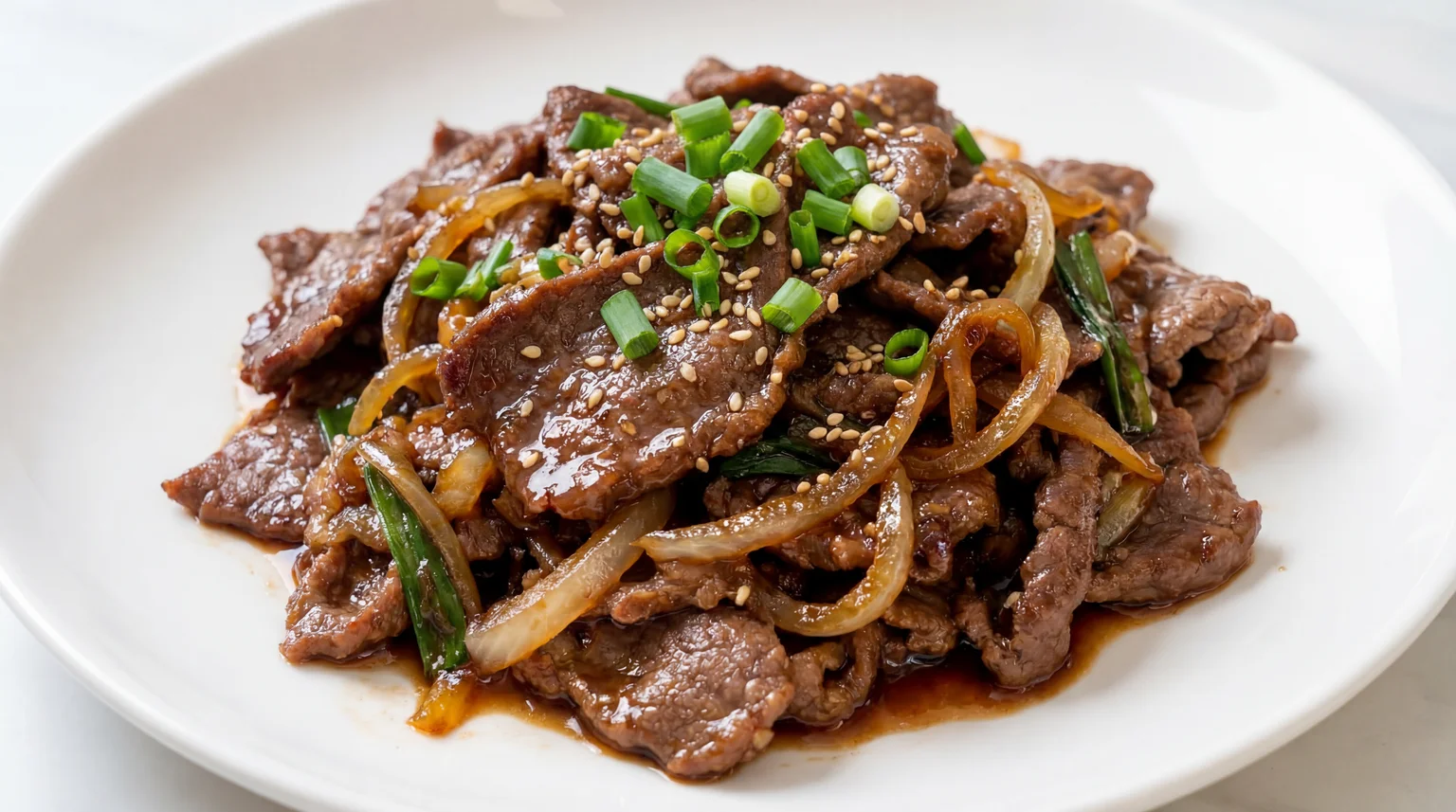
Ever tried cooking Korean Beef Bulgogi at home and ended up with tough, chewy meat instead of those melt-in-your-mouth slices you had at your favorite restaurant? I get it. This post is for anyone who wants authentic traditional Korean beef bulgogi without the guesswork or complicated steps. I’m walking you through exactly how to make tender, flavorful bulgogi that actually tastes like the real thing.
My neighbor Mrs. Kim caught me struggling with a bulgogi disaster some years ago. I’d just moved into the building, and the smell of burnt soy sauce was pouring from my kitchen window. She knocked on my door, took one look at my pan, and laughed. “You’re cooking it like a steak,” she said. She showed me her mother’s technique right there in my tiny kitchen. That afternoon changed everything I thought I knew about making Korean beef bulgogi at home.

Why This Recipe Works
This easy stovetop beef bulgogi recipe beats takeout every time. Here’s why:
• The Asian pear does the work. It tenderizes the meat naturally. No weird texture, no pounding required.
• You probably have most ingredients already. Soy sauce, garlic, sugar, sesame oil. That’s the foundation.
• It cooks in under 10 minutes. Once marinated, this is faster than ordering delivery.
• The meat stays tender, not tough. Thin slicing and quick cooking make all the difference.
• Leftovers taste amazing. Throw it in rice bowls, wraps, or even scrambled eggs the next morning.
• No grill needed. A regular skillet works perfectly for this quick 30 minute beef bulgogi.
Ingredients You’ll Need For Korean Beef Bulgogi

For the Beef:
- 2 pounds beef ribeye or sirloin, thinly sliced: You want tender thinly sliced Korean BBQ beef. Ribeye has the best marbling. Freeze it for 30 minutes before slicing. Makes cutting way easier.
For the Best Bulgogi Marinade:
- 1/2 cup soy sauce: This is your salt and umami base. Use regular soy sauce, not low sodium. We need that depth.
- 3 tablespoons brown sugar: Balances the salty soy and helps with caramelization. Don’t skip this.
- 1/4 Asian pear, grated: The secret weapon. Contains enzymes that break down proteins. Makes the meat incredibly tender.
- 2 tablespoons sesame oil: Adds nutty richness. The smell alone is worth it.
- 6 cloves garlic, minced: Korean cooking loves garlic. This amount is not a typo.
- 1 tablespoon fresh ginger, grated: Adds brightness and cuts through the richness.
- 2 tablespoons mirin or rice wine: Adds subtle sweetness and depth.
- 1 tablespoon gochugaru (optional): For spicy Korean beef bulgogi stir fry. Leave it out if you don’t want heat.
- 1/4 cup green onions, chopped: Both for marinade and garnish.
- 2 tablespoons toasted sesame seeds: Finishing touch that adds texture.
- Black pepper to taste: Just a few grinds.
Equipment You’ll Need
- Large mixing bowl for marinating
- Sharp knife (or ask your butcher to slice the meat)
- Large cast iron skillet or wok
- Tongs for flipping
- Grater for the pear and ginger
How I Make Beef Bulgogi

Step 1: Prep Your Beef
Slice the beef against the grain as thin as possible. I’m talking 1/8 inch thin. If you’re struggling, pop the meat in the freezer for 30 minutes first. It firms up and slices like butter. Your butcher can also do this for you. Just ask for “bulgogi cut.”
Step 2: Make the Soy Sesame Beef Bulgogi Sauce
Grab a large bowl. Combine soy sauce, brown sugar, sesame oil, garlic, ginger, mirin, and gochugaru if using. Grate the Asian pear directly into the mixture. The pear juice is gold here. Whisk everything together until the sugar dissolves. Taste it. Should be sweet, salty, and a bit funky in the best way.
Step 3: Marinate the Meat
Add your sliced beef to the marinade. Use your hands. Mix it around. Make sure every piece gets coated. Cover the bowl and stick it in the fridge. Two hours minimum. Overnight is even better. The longer it sits, the more flavor soaks in and the more the pear works its magic.
Step 4: Cook in Batches
This is where most people mess up. Don’t dump all the meat in at once. Heat your skillet over high heat until it’s screaming hot. Add just enough beef to cover the pan in a single layer. You want the meat to sear, not steam. Cook for 2 minutes without touching it. Flip. Cook another 1-2 minutes. The edges should get slightly charred and caramelized. Remove and repeat with the rest.
Step 5: Finish and Serve
Once all the beef is cooked, toss it back in the pan with any remaining marinade. Let it bubble for 30 seconds. The sauce will thicken and coat everything. Sprinkle with green onions and sesame seeds. Serve immediately over rice for a homemade Korean beef bulgogi bowl.

Tips That Make a Difference
Freeze before slicing. Seriously. This tip alone will change your life. Semi-frozen meat slices clean and thin.
Don’t skip the Asian pear. I’ve seen recipes using kiwi or pineapple. Asian pear is gentler and doesn’t make the meat mushy. If you absolutely can’t find it, use a regular pear plus a tiny bit of kiwi.
High heat is your friend. You want that char. That’s where the flavor lives. Medium heat will just make things soggy.
Pat the meat dry before cooking. If it’s dripping with marinade, it won’t sear. Shake off excess liquid.
Use a cast iron skillet if you have one. Holds heat better than nonstick. Creates better browning.
Add vegetables to the pan. Sliced onions, mushrooms, or carrots work great. Throw them in during the last minute of cooking.
Double the marinade recipe. Keep half for cooking, save half for drizzling at the end. Just make sure the saved portion never touches raw meat.
Easy Variations
Spicy Version: Add 1-2 tablespoons gochujang (Korean red pepper paste) to the marinade along with the gochugaru for serious heat.
Korean Beef Bulgogi Lettuce Wraps: Skip the rice. Serve the beef in butter lettuce leaves with shredded carrots, cucumber, and a smear of gochujang mayo.
Grilled Marinated Beef Bulgogi: Fire up your grill or use a grill pan. Thread the marinated meat onto skewers. Grill over direct high heat for 2 minutes per side. For more grilling techniques, check out this Korean Barbecue Beef Bulgogi recipe from Serious Eats.
Bulgogi Tacos: Put the beef in flour tortillas with kimchi, sriracha mayo, and cilantro. Sounds weird. Tastes incredible.
Bulgogi Fried Rice: Chop up leftover bulgogi and toss it into fried rice with eggs, peas, and sesame oil.
Less Sweet Version: Cut the sugar in half if you prefer a more savory profile. It’ll still caramelize, just less intensely.

Storage and Reheating
Storing: Keep cooked bulgogi in an airtight container in the fridge for up to 4 days. The flavors actually get better after a day or two.
Freezing: Freeze cooked bulgogi for up to 3 months. Portion it out first so you can defrost only what you need. Flash freeze on a baking sheet, then transfer to freezer bags.
Reheating: Microwave works fine, but a quick blast in a hot skillet brings back that charred texture. Add a splash of water if it’s dried out. 30 seconds on high heat does it.
Marinated but not cooked: You can freeze raw marinated beef for up to 2 months. Defrost in the fridge overnight before cooking. The meat continues marinating as it thaws.
Frequently Asked Questions
Can I use chicken or pork instead of beef?
Absolutely. Chicken thighs work better than breasts since they stay juicier. Pork shoulder or pork belly both work great. Adjust cooking time slightly since pork needs to be fully cooked through.
What if I can’t find Asian pear?
Regular pear plus half a kiwi works in a pinch. Or use pineapple juice, about 2 tablespoons. Just don’t marinate longer than 2 hours with kiwi or pineapple since they’re more aggressive enzymes and can turn meat mushy.
How thin should I really slice the beef?
Aim for 1/8 inch or thinner. Think deli meat thin. If you’re slicing by hand and struggling, ask your butcher. Most will slice it for bulgogi if you explain what you’re making.
My bulgogi turned out tough. What happened?
Either your slices were too thick, you didn’t marinate long enough, or you overcooked it. Bulgogi cooks FAST. Two minutes per side max. Also make sure you sliced against the grain, not with it.
Can I make this without sesame oil?
You could, but you’d lose a lot of that authentic traditional Korean beef bulgogi flavor. Sesame oil is pretty essential. If you absolutely must substitute, try a neutral oil with a tiny drop of toasted sesame seeds ground into it. Not the same, but better than nothing.
Nutrition Information
Per Serving (based on 4 servings):
• Calories: 385 • Protein: 32g • Total Fat: 20g • Saturated Fat: 8g • Carbohydrates: 18g • Dietary Fiber: 1g • Sugars: 14g • Cholesterol: 95mg • Sodium: 980mg • Iron: 4mg (22% DV) • Potassium: 520mg
Bulgogi is high in protein, supporting muscle repair and growth. It contains iron for red blood cell production and B vitamins for energy metabolism. The sesame oil provides heart-healthy monounsaturated fats. Keep in mind the marinade adds sodium and sugar, so adjust ingredients if you’re watching those.
Final Note
Making Korean Beef Bulgogi at home isn’t some impossible restaurant secret. It’s actually pretty straightforward once you understand the basics. The marinade does most of the work. Your job is just slicing thin, being patient with the marinating time, and cooking hot and fast. That’s it. Every time I make this now, I think about Mrs. Kim laughing at my burnt pan and showing me the real way. Food connects people like that.
*This post may contain affiliate links which means I may earn commissions for purchases made through links at no extra cost to you. See https://asianfoodsdaily.com/disclaimer/* for more infomation
Best Korean Beef Bulgogi Recipe
Main course15 minutes (plus 2 hours marinating)
10 minutes
2 hours 25 minutes
Ingredients
- • 2 pounds beef ribeye or sirloin, thinly sliced
- • 1/2 cup soy sauce
- • 3 tablespoons brown sugar
- • 1/4 Asian pear, grated
- • 2 tablespoons sesame oil
- • 6 cloves garlic, minced
- • 1 tablespoon fresh ginger, grated
- • 2 tablespoons mirin or rice wine
- • 1 tablespoon gochugaru (optional)
- • 1/4 cup green onions, chopped
- • 2 tablespoons toasted sesame seeds
- • Black pepper to taste
Instructions
- 1 Prep Your Beef
- 2 Make the Soy Sesame Beef Bulgogi Sauce
- 3 Marinate the Meat
- 4 Cook in Batches
- 5 Finish and Serve
Post your Comment
0 Comments
No comments yet. Be the first to share your thoughts!