Authentic Yangzhou Fried Rice Recipe
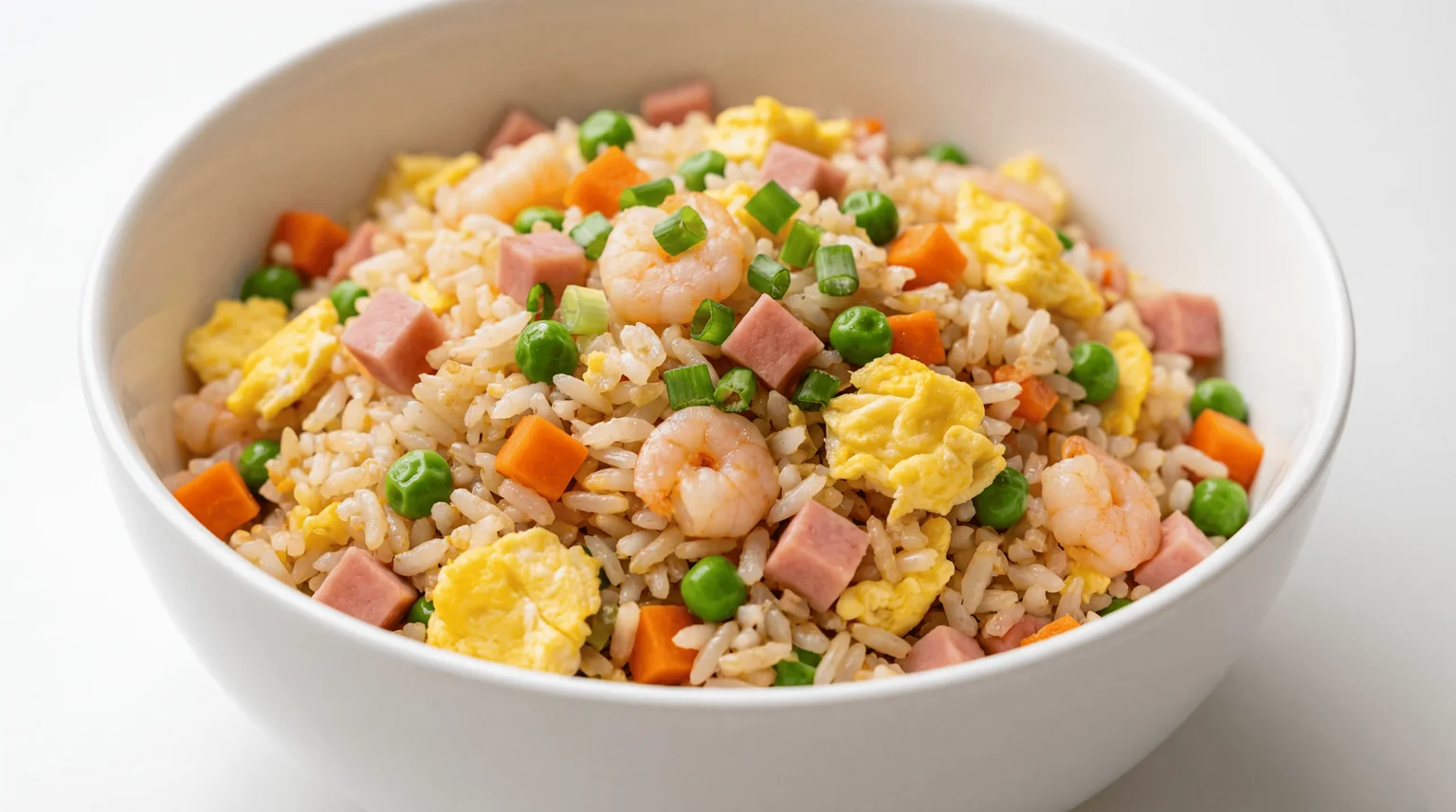
Want restaurant-quality Chinese Yang Chow fried rice at home? This guide walks you through every step of making traditional Yangzhou fried rice with shrimp and pork. Perfect for busy weeknights or when you want something special without the fuss.
My grandmother never measured anything. She’d scoop day-old rice from the pot, crack eggs with one hand, and somehow produce the most incredible Yangzhou fried rice I’ve ever tasted. I spent years trying to recreate that dish. The secret wasn’t just technique—it was understanding why each ingredient mattered. That’s what I’m sharing today.

Why This Yangzhou Fried Rice Recipe Wins
This classic Yangzhou egg fried rice stands apart for a few reasons. First, the balance. Sweet shrimp, savory char siu pork, and fluffy eggs work together without competing. Second, the texture. Each grain stays separate. No clumpy mess. Third, it actually tastes like what you’d get in Yangzhou—not some Americanized version.
Most recipes online miss the point. They throw in whatever’s in the fridge and call it combination fried rice. Real Yang Zhou fried rice follows specific traditions. The ingredient list isn’t random. Each element earns its place.
Ingredients You’ll Need for Authentic Yangzhou Fried Rice

Rice (3 cups, cooked and cooled): Day-old rice works best. Fresh rice has too much moisture and gets sticky. Spread it on a sheet pan overnight if you’re in a hurry.
Eggs (3 large): They coat the rice grains and add richness. Beat them lightly—you want streaks, not a uniform scramble.
Char siu pork (1/2 cup, diced): This sweet barbecued pork defines the dish. Ham works in a pinch, but it’s not the same.
Shrimp (1/2 cup, medium-sized): Fresh or frozen, just make sure they’re deveined. They add that essential seafood sweetness to this traditional Chinese fried rice with shrimp and pork.
Green peas (1/4 cup): Color and a slight sweetness. Frozen is fine.
Green onions (3 stalks): Freshness and bite. Chop the white and green parts separately.
Soy sauce (1 tablespoon): Just enough for color and salt. Don’t overdo it.
Sesame oil (1 teaspoon): Added at the end for aroma.
Vegetable oil (3 tablespoons): High smoke point is key for proper wok hei.
White pepper (1/4 teaspoon): Traditional choice. Black pepper changes the flavor profile.
How I Make Yangzhou Style Fried Rice
Step 1: Prep Everything First
Once you start cooking, things move fast. Dice your char siu into small cubes. Devein and pat dry your shrimp. Beat your eggs. Line everything up next to the stove. Trust me on this—scrambling mid-cook ruins the timing.
Step 2: Cook the Shrimp
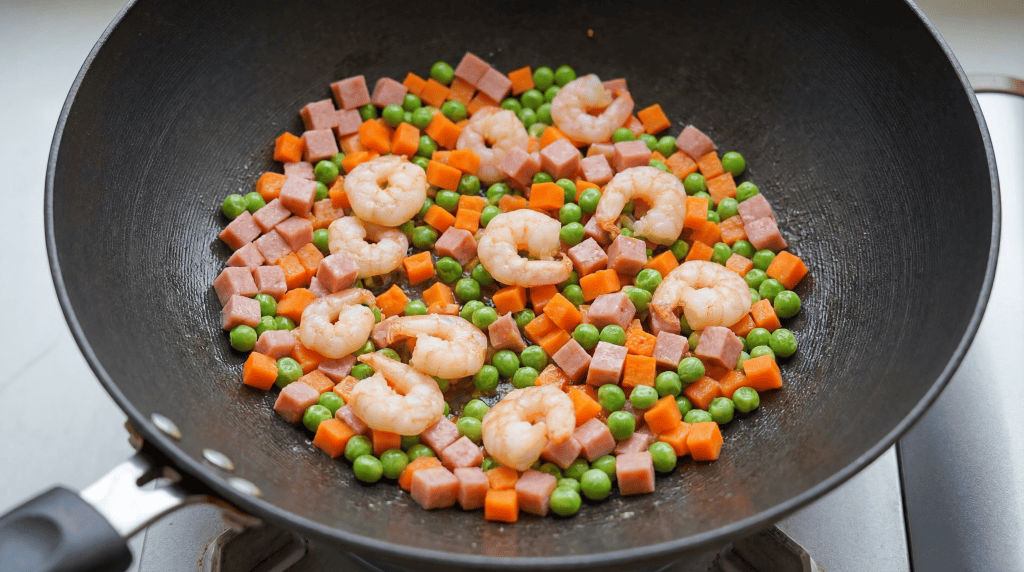
Heat your wok until it smokes slightly. Add one tablespoon of oil. Toss in the shrimp and cook for about 90 seconds. They should be pink and just curled. Remove and set aside. Don’t overcook them now—they’ll get more heat later.
Step 3: Scramble the Eggs
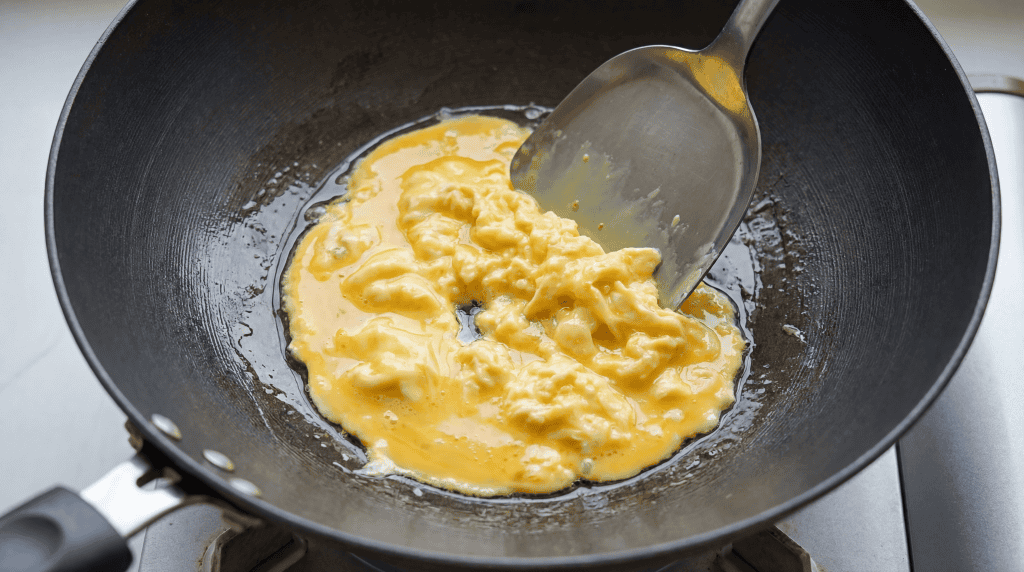
Add another tablespoon of oil. Pour in the beaten eggs. Let them set for about 10 seconds, then scramble gently. You want big, soft curds. Remove when they’re still slightly wet.
Step 4: Fry the Rice
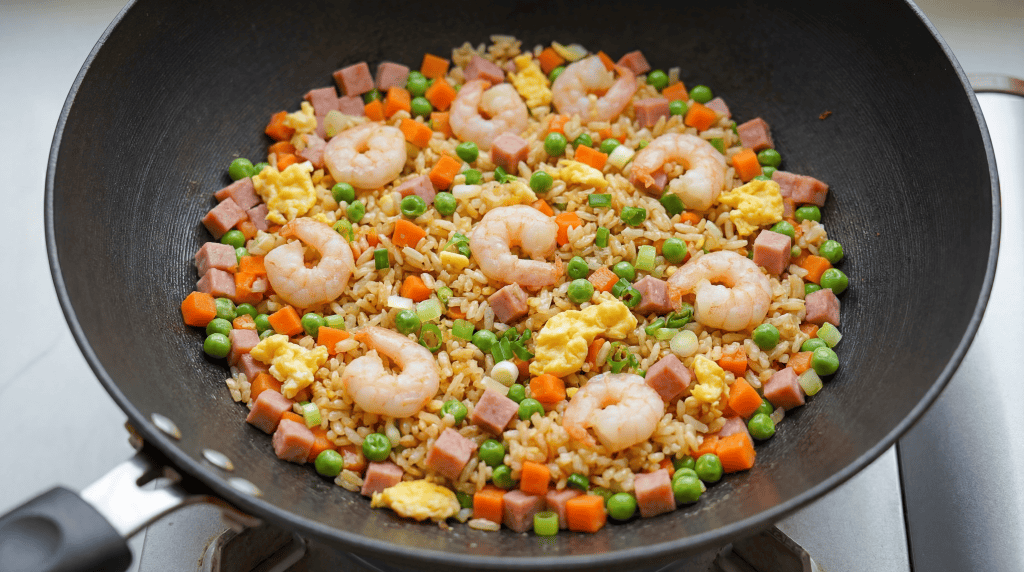
This is where the magic happens. Add the remaining oil. When it shimmers, add the cold rice. Break up any clumps with your spatula. Keep it moving. You want every grain coated in oil and slightly toasted. Takes about 3 minutes of constant stirring.
Step 5: Bring It Together
Add the char siu and white parts of the green onions. Stir for one minute. Return the shrimp and eggs. Add the peas. Drizzle soy sauce around the edges of the wok—not directly on the rice. Toss everything together. Finish with white pepper, sesame oil, and green onion tops.
Tips That Make a Difference for Your Yangzhou Fried Rice
High heat matters more than anything else. Your wok should be screaming hot. If it’s not smoking a little, it’s not ready. That intense heat creates wok hei—that smoky, charred flavor you get at good Chinese restaurants.
Don’t crowd the wok. If you’re cooking for more than two or three people, make multiple batches. Overcrowding drops the temperature and you’ll end up with steamed rice instead of fried.
Break up the rice before it hits the wok. Cold rice clumps. Use your hands to separate the grains while it’s still in the bowl.
Easy Variations for Your Yeung Chow Fried Rice
No char siu? Diced ham or Chinese sausage (lap cheong) works. The flavor profile shifts, but it’s still delicious.
Shrimp allergy? Double the pork and add some diced chicken breast.
Want more vegetables? Diced carrots and corn are traditional additions. Just don’t go overboard—this isn’t a veggie stir-fry.
Storage and Reheating Your Yangzhou Fried Rice
Leftovers keep in the fridge for three days. Store in an airtight container once it’s completely cooled.
Reheat in a hot wok or skillet with a splash of oil. The microwave works if you’re in a rush, but you’ll lose that crispy texture. Add a few drops of water before microwaving to prevent drying out.
Equipment for the Best Combination Fried Rice
A carbon steel wok is ideal. It heats evenly and gets hot enough for proper frying. A large cast iron skillet works as a backup. Avoid non-stick—it can’t handle the high temperatures needed.
You’ll also need a wok spatula or a sturdy flat-edged wooden spoon. Something that can scrape the bottom and keep things moving.
FAQs About Authentic Yangzhou Fried Rice
What makes Yangzhou fried rice different from regular fried rice?
The specific combination of char siu pork and shrimp defines this dish. It originated in Yangzhou, China, and follows traditional proportions. Regular fried rice can contain almost anything.
Can I use freshly cooked rice?
You can, but spread it on a sheet pan and refrigerate for at least an hour first. Fresh rice has too much moisture and will turn mushy.
Why is my fried rice mushy?
Three likely causes: the rice was too fresh, the wok wasn’t hot enough, or you overcrowded the pan. Fix any of those and you’ll see improvement.
Is Yeung Chow fried rice the same as Yangzhou fried rice?
Yes. Yeung Chow is the Cantonese pronunciation of Yangzhou. Same dish, different romanization.
How do I get that restaurant smoky flavor?
That’s wok hei, and it comes from extremely high heat. Most home stoves struggle to replicate it. Get your wok as hot as possible and cook in small batches. Some folks use a propane burner outdoors for better results.
Final Note
Learning how to make Yangzhou style fried rice takes practice. Your first batch might not be perfect. Mine certainly wasn’t. But once you nail it—once you taste those separate grains with the sweet pork and plump shrimp—you’ll understand why this easy Yeung Chow fried rice has been a Chinese kitchen staple for generations.
My grandmother passed away before she could teach me everything. But every time I make this dish, I’m back in her kitchen. The sizzle of the wok, the smell of sesame oil at the end—it’s all there. Food carries memory in ways nothing else can. Make this for your family. Start your own tradition.
*This post may contain affiliate links which means I may earn commissions for purchases made through links at no extra cost to you. See https://asianfoodsdaily.com/disclaimer/* for more infomation
Post your Comment
0 Comments
No comments yet. Be the first to share your thoughts!