Authentic Thai Fried Rice (Khao Pad) Recipe
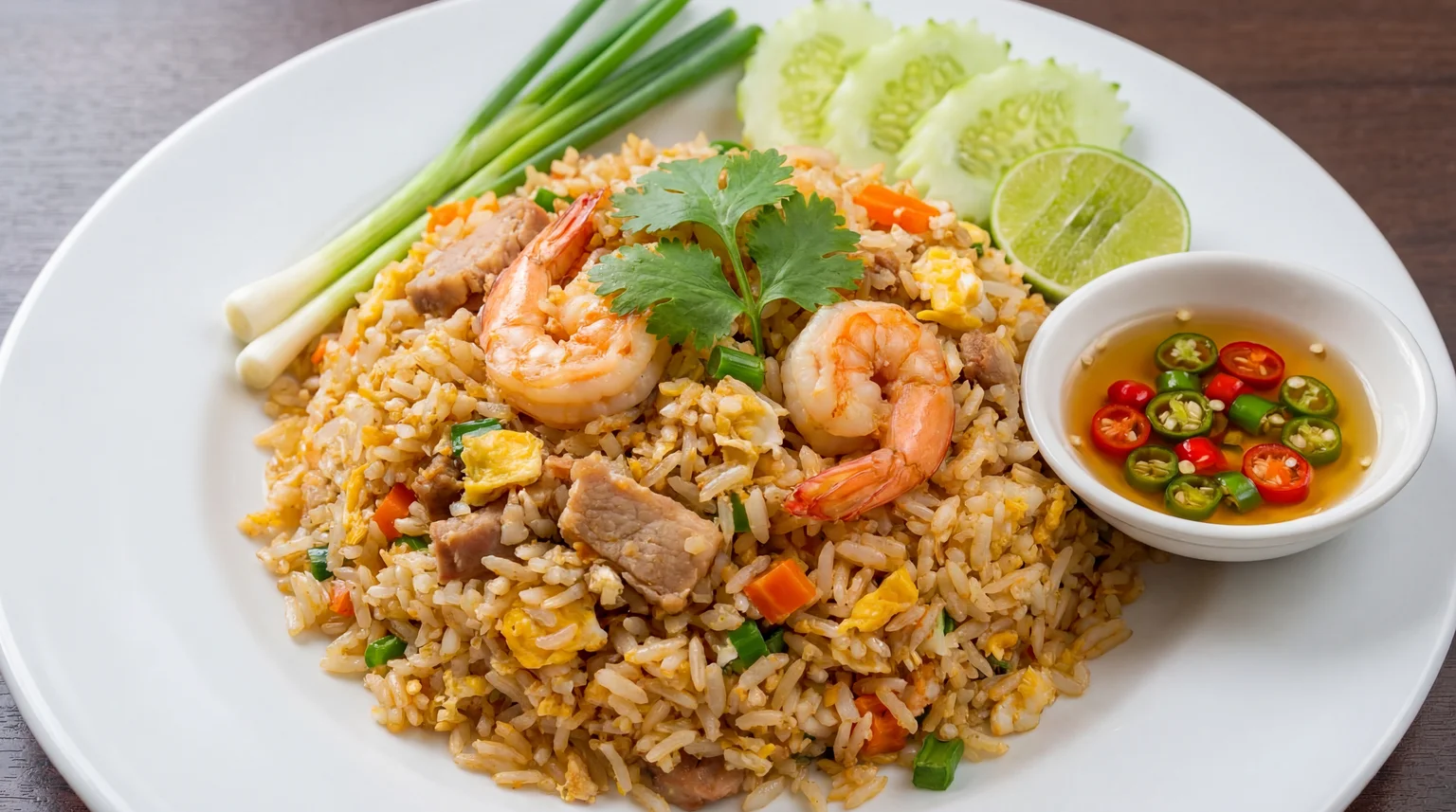
Making authentic Thai fried rice at home is simpler than you might think. This complete guide shows you how to recreate the light, fragrant Khao Pad served at Thai street stalls, with the right ingredients, techniques, and insider tips from years of cooking Thai cuisine.
Table of Contents
- What Is Thai Fried Rice (Khao Pad)?
- Why This Recipe Works
- Authentic Thai Fried Rice Ingredients
- How to Make Thai Fried Rice: Step-by-Step
- What Makes Thai Fried Rice Different from Chinese Fried Rice?
- Common Mistakes to Avoid
- Popular Thai Fried Rice Variations
- Tips for Perfect Thai Fried Rice Every Time
- How Long Does Thai Fried Rice Last?
- Can I Make Thai Fried Rice Vegetarian?
- What Rice Should I Use for Thai Fried Rice?
- Frequently Asked Questions
- The Cultural Context of Khao Pad
- Final Thoughts
What Is Thai Fried Rice (Khao Pad)?
Thai fried rice, called Khao Pad (ข้าวผัด), is Thailand’s beloved everyday rice dish featuring jasmine rice stir-fried with garlic, egg, fish sauce, and your choice of protein. Unlike Chinese fried rice, which relies on soy sauce for a darker color and deeper umami, Thai fried rice stays light in color and gets its distinctive savory funk from fish sauce. The dish is always served with fresh lime wedges, cucumber slices, and Prik Nam Pla (a spicy fish sauce condiment) on the side, allowing you to customize the heat and acidity to your taste.
Why This Recipe Works
After cooking hundreds of batches of Khao Pad in home kitchens and studying the technique at Bangkok street stalls, I’ve identified three crucial elements that separate soggy, bland fried rice from the real deal:
- Day-old jasmine rice: Fresh rice contains too much moisture and turns mushy when stir-fried. Day-old rice has dried out slightly, allowing each grain to stay separate and develop that coveted chewy texture.
- Fish sauce as the primary seasoning: This gives Thai fried rice its signature savory depth that soy sauce simply cannot replicate.
- High heat with rhythmic folding: Rather than constant aggressive tossing, Thai technique uses controlled folding motions to distribute seasonings without breaking delicate jasmine grains.
Authentic Thai Fried Rice Ingredients
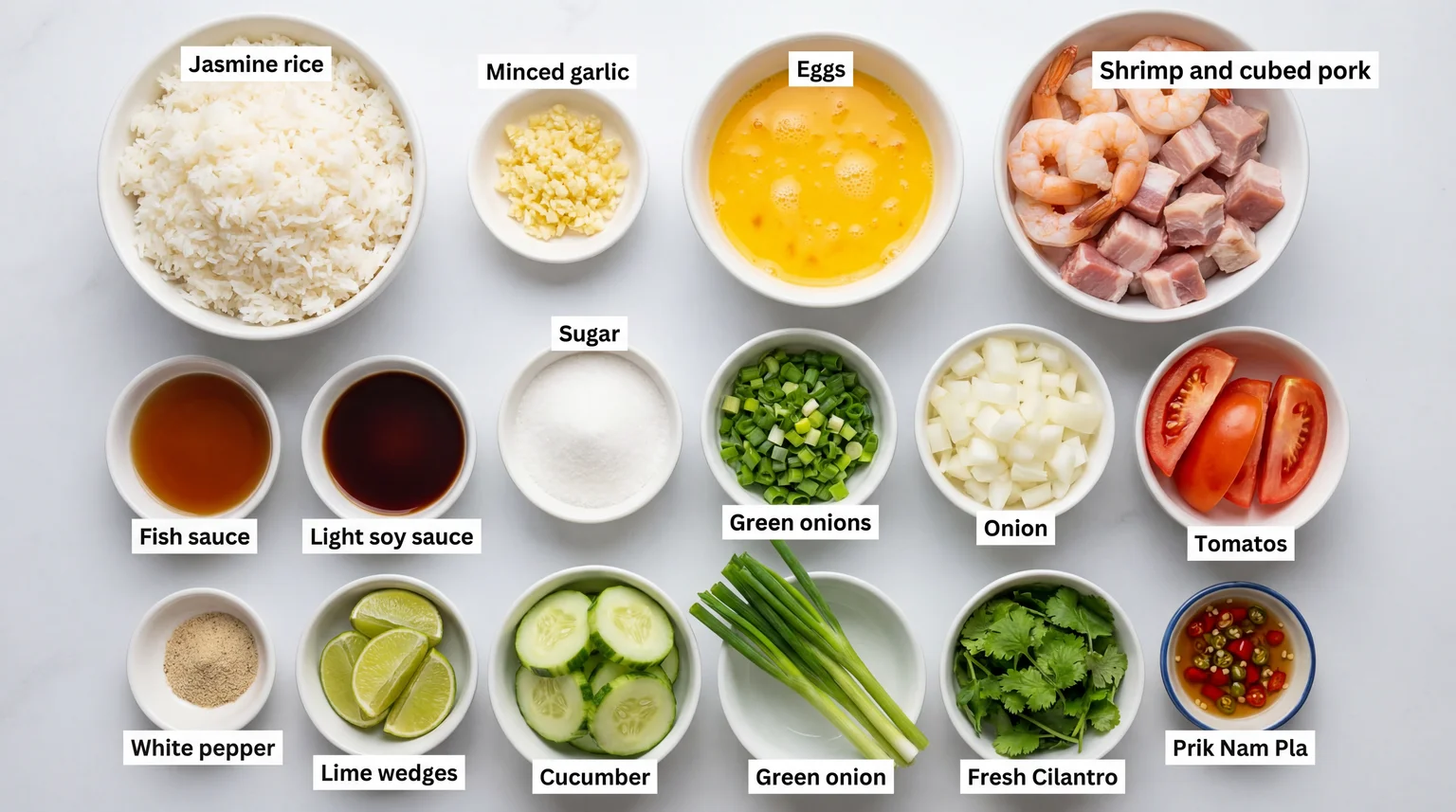
For the Fried Rice (Serves 2-3)
- 3 cups cooked jasmine rice (day-old, refrigerated)
- 2 tablespoons neutral oil (vegetable or canola)
- 3-4 cloves garlic, minced
- 2 large eggs, lightly beaten
- 200g protein (shrimp, chicken, pork, or crab)
- 2 tablespoons fish sauce (nam pla)
- 1 tablespoon light soy sauce
- 1 teaspoon sugar
- 2 green onions, cut into 1-inch pieces
- 1 small onion, diced (optional)
- 1 medium tomato, cut into wedges
- White pepper to taste
For Serving
- Lime wedges (essential)
- Cucumber slices
- Green onion stalks
- Prik Nam Pla (fish sauce with chilies - recipe below)
- Fresh cilantro (optional)
For Prik Nam Pla Condiment
- 3 tablespoons fish sauce
- 2 tablespoons lime juice
- 3-5 bird’s eye chilies, thinly sliced
- 1 clove garlic, minced
- 1/2 teaspoon sugar
How to Make Thai Fried Rice: Step-by-Step
Preparation (15 minutes before cooking)
- Prepare your rice: If using freshly cooked rice, spread it on a baking sheet and refrigerate for at least 2 hours, or better yet, use rice cooked the day before. Break up any clumps with your hands so the grains are separate.
- Prep all ingredients: Mince garlic, cut green onions, dice onion, prepare tomato wedges, and have your protein ready. Thai stir-frying happens fast, so everything must be within reach.
- Make Prik Nam Pla: Combine fish sauce, lime juice, sliced chilies, minced garlic, and sugar in a small bowl. Stir until sugar dissolves. Set aside.
Cooking (8-10 minutes)
Step 1: Heat your wok Place a wok or large skillet over high heat until it just begins to smoke. Add 2 tablespoons of oil and swirl to coat the surface.
Step 2: Fry the aromatics Add minced garlic and stir constantly for 15-20 seconds until fragrant and just beginning to turn golden. Do not burn the garlic.
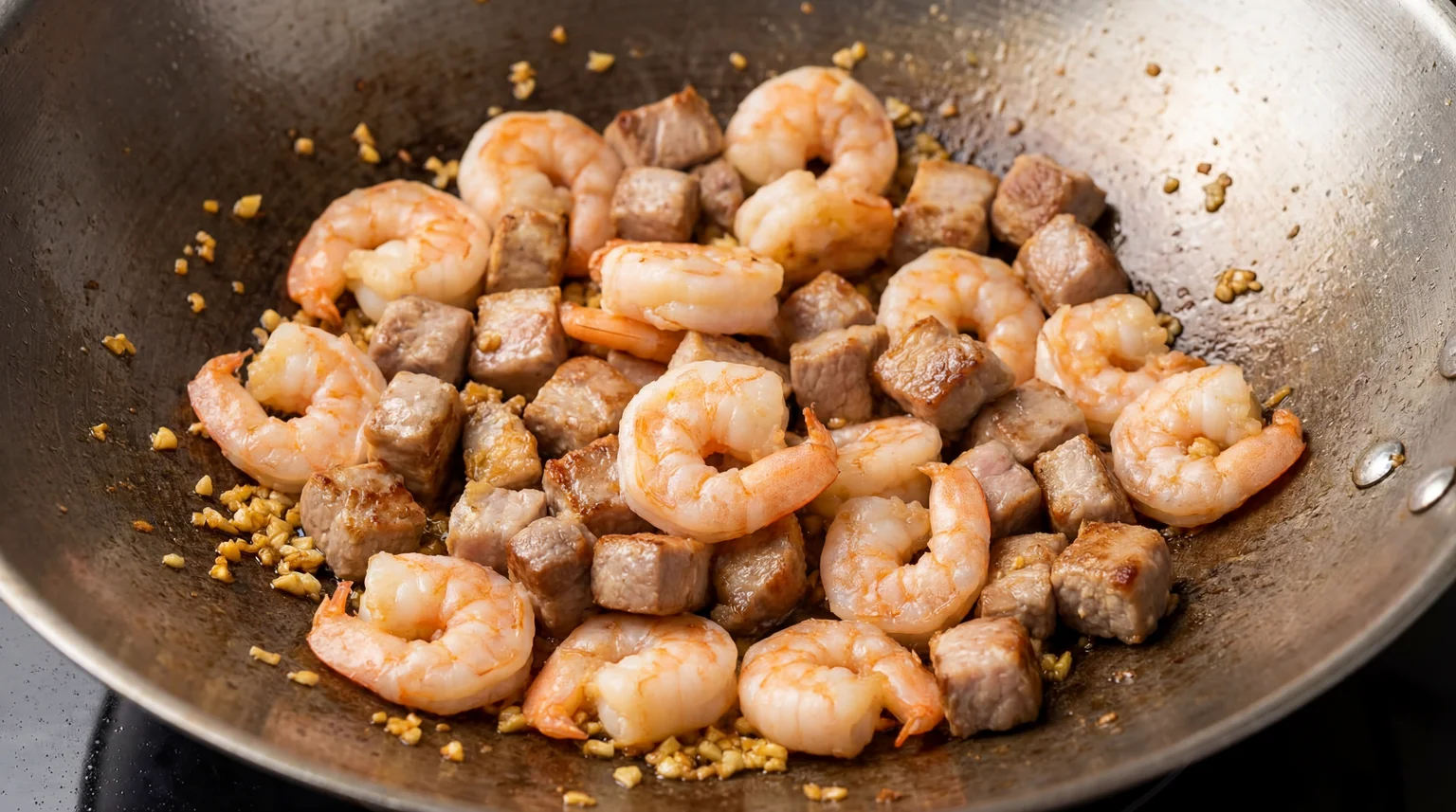
Step 3: Cook the protein Add your chosen protein (shrimp, chicken, pork, or crab) and stir-fry for 2-3 minutes until just cooked through. If using shrimp, cook until they turn pink and curl.
Step 4: Scramble the egg Push the protein to one side of the wok. Pour beaten eggs into the empty space and let them set for 10 seconds. Then gently scramble into small curds. Mix with the protein.
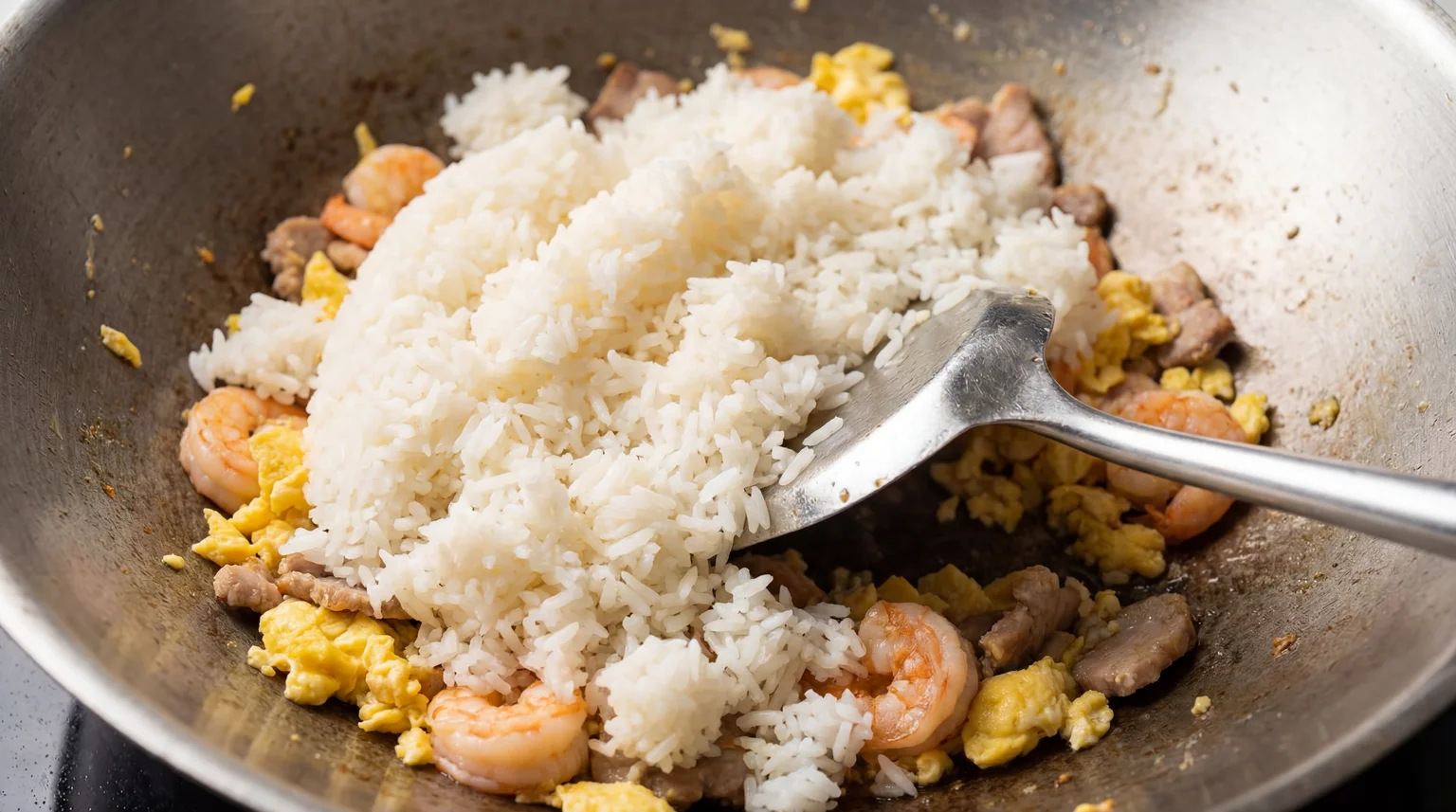
Step 5: Add the rice Add the day-old jasmine rice to the wok. Use your spatula to break up any remaining clumps. Use a folding motion rather than aggressive tossing—lift from the bottom and fold over repeatedly for about 2 minutes.
Step 6: Season the rice Drizzle fish sauce and soy sauce over the rice (pour it around the edges of the wok, not directly on the rice). Sprinkle sugar over the top. Continue folding and tossing for 2-3 minutes until the rice absorbs the sauces and starts to lightly caramelize. The rice should remain light tan, not dark brown.
Step 7: Add vegetables Toss in diced onion (if using), green onions, and tomato wedges. Stir-fry for another minute. The tomatoes should soften slightly but not disintegrate. Season with white pepper to taste.
Step 8: Final touches Taste the rice. If it needs more saltiness, add a bit more fish sauce. The rice should taste balanced—savory with a hint of sweetness.
Plating
Transfer the fried rice to serving plates. Arrange cucumber slices, lime wedges, and green onion stalks on the side. Serve immediately with Prik Nam Pla in a small bowl.
Instruct diners to squeeze fresh lime over their portion and add Prik Nam Pla according to their heat tolerance. The lime juice brightens the entire dish and is non-negotiable in authentic Thai presentation.
What Makes Thai Fried Rice Different from Chinese Fried Rice?
Many people confuse Thai and Chinese fried rice, but they’re distinct dishes:
Seasoning: Thai fried rice uses fish sauce as the primary flavoring, giving it a funkier, more aromatic profile. Chinese fried rice relies on soy sauce and oyster sauce for deeper, richer umami.
Color: Authentic Thai fried rice is light tan to pale brown. Chinese fried rice (especially Yangzhou style) is darker due to dark soy sauce.
Rice type: Both use day-old long-grain rice, but Thai versions specifically use jasmine rice for its floral aroma, while Chinese versions often use generic long-grain or even short-grain varieties.
Condiments: Thai fried rice comes with lime, fresh vegetables, and spicy fish sauce on the side. Chinese fried rice is served as a complete dish without additional condiments.
Texture: Thai fried rice grains are slightly more separate and fluffy, while Chinese versions can be slightly more compact and glossy from oyster sauce.
Common Mistakes to Avoid
After teaching dozens of home cooks this recipe, I’ve seen these errors repeatedly:
Using fresh rice: This is the number one mistake. Fresh rice contains too much moisture and will turn gummy when stir-fried. Always use day-old refrigerated rice or rice that has been spread out and cooled for at least 2 hours.
Overcrowding the wok: Cooking more than 3 cups of rice at once in a standard home wok prevents proper heat distribution. The rice steams instead of fries. Cook in batches if serving a crowd.
Using too much sauce: Thai fried rice should taste vibrant but not be soggy or wet. Add sauces gradually and taste as you go.
Skipping the lime: Lime juice is essential, not optional. It cuts through the oil and brings all the flavors together.
Using regular table sugar: While not a dealbreaker, palm sugar gives a more authentic rounded sweetness. If you have it, use 1 teaspoon of palm sugar instead of white sugar.
Popular Thai Fried Rice Variations
Khao Pad Pu (Crab Fried Rice)
This luxurious version uses fresh lump crab meat. Use minimal soy sauce to keep the rice pale and let the sweet crab shine. Add crab meat at the very end to prevent it from breaking apart.
Khao Pad Sapparod (Pineapple Fried Rice)
Add 1 teaspoon of curry powder to the oil before frying garlic. Include diced pineapple, roasted cashews, and raisins. Traditionally served in a hollowed pineapple half for presentation.
Khao Pad Krapow (Basil Fried Rice)
Increase chilies significantly and add 1 cup of fresh holy basil leaves at the very end. This fiery variation combines Thai basil chicken (Pad Krapow) elements with fried rice.
Khao Pad American
A quirky Thai-American fusion born during the Vietnam War era. Add 2 tablespoons of ketchup, a handful of raisins, and serve with fried chicken pieces and sliced hot dogs on top.
Tips for Perfect Thai Fried Rice Every Time
Rice preparation is everything: Remove rice from the refrigerator 10 minutes before cooking to take the chill off. Break up clumps thoroughly with your hands before it hits the wok.
Wok temperature: Your wok should be hot enough that a drop of water evaporates instantly on contact. If your kitchen isn’t equipped with high BTU burners, preheat your wok for a full 3-4 minutes.
Work in batches: It’s better to make two small batches than one large batch that doesn’t cook evenly.
Taste and adjust: Thai cuisine is all about balance. Taste your rice before serving and adjust with more fish sauce (for saltiness), sugar (for sweetness), or lime juice (for acidity).
Fresh matters: Always serve with freshly cut lime wedges and cucumber slices. The refreshing crunch and acidity elevate the dish from good to restaurant-quality.
How Long Does Thai Fried Rice Last?
Thai fried rice keeps in an airtight container in the refrigerator for 3-4 days. Reheat in a wok or skillet over high heat with a splash of water to rehydrate. Microwaving works but results in softer rice that lacks the original texture.
Do not freeze Thai fried rice, as the jasmine rice grains become mushy when thawed.
Can I Make Thai Fried Rice Vegetarian?
Absolutely. Replace the protein with firm tofu (pressed and cubed) or mixed vegetables like carrots, peas, and bell peppers. The key adjustment is the seasoning: fish sauce is not vegetarian. Substitute with:
- Soy sauce: Use 2.5 tablespoons light soy sauce instead of the fish sauce/soy sauce combination
- Mushroom sauce: Thai mushroom seasoning sauce provides umami depth without fish
- Seaweed: Add a small piece of dried seaweed to the oil when frying garlic, then remove it. This adds oceanic flavor
The technique remains identical.
What Rice Should I Use for Thai Fried Rice?
Jasmine rice is non-negotiable for authentic Thai fried rice. This long-grain rice from Thailand has a naturally floral aroma and slightly sticky texture when cooked that distinguishes Khao Pad from other Asian fried rice dishes.
Do not use: Basmati rice (too dry and separate), sushi rice (too sticky), brown rice (wrong texture and flavor), or instant rice (lacks proper structure).
If you cannot find jasmine rice, regular long-grain white rice is the only acceptable substitute, though the dish will lack the signature aroma.
Frequently Asked Questions
Can I use brown rice instead of white jasmine rice? While you can use brown rice, it won’t be authentic Thai fried rice. Brown rice has a chewier texture and nuttier flavor that doesn’t absorb fish sauce the same way. If using brown rice for health reasons, increase the fish sauce slightly and expect a different final dish.
Do I really need fish sauce? Yes, fish sauce (nam pla) is the defining flavor of Thai fried rice. Soy sauce alone creates Chinese-style fried rice, not Thai. If you’re avoiding fish products for dietary reasons, see the vegetarian substitution section above.
My fried rice always turns out mushy. What am I doing wrong? You’re using rice that’s too fresh or too wet. Day-old rice that has been refrigerated is essential. Fresh rice contains excess moisture that steams rather than fries. Also check that you’re not overcrowding your wok and that your heat is high enough.
What’s the best protein for Thai fried rice? Shrimp is the most popular choice in Thailand, followed by chicken thigh meat (not breast, which dries out). Pork and crab are also common. The protein should be cut into small, bite-sized pieces so it cooks quickly and distributes evenly.
Can I make this ahead for meal prep? Thai fried rice is best eaten immediately, but you can prepare components in advance. Cook rice 1-2 days ahead, prep all vegetables and proteins in the morning, and make Prik Nam Pla up to 3 days ahead. Do the final stir-frying right before serving for the best texture.
Why does restaurant Thai fried rice taste better than mine? Restaurant woks operate at much higher heat (producing “wok hei” or breath of the wok), and chefs have years of practice with the folding technique. You can get closer by using the highest heat your stove allows, ensuring day-old rice, and not overcrowding the wok. The lime and Prik Nam Pla condiments also make a significant difference—don’t skip them.
What side dishes go well with Thai fried rice? Thai fried rice is often a complete meal, but it pairs well with Thai cucumber salad (Ajad), Thai omelet (Kai Jeow), or Thai chicken satay. For a fuller meal, serve alongside Tom Yum soup or Som Tam (green papaya salad).
The Cultural Context of Khao Pad
Thai fried rice is more than just a recipe—it’s a cornerstone of Thai street food culture and home cooking. Walk through any Thai market or night market, and you’ll find at least three vendors specializing in various Khao Pad styles, each with their own loyal following.
The dish likely evolved from Chinese fried rice brought by Chinese immigrants to Thailand centuries ago but was transformed by Thai ingredients and taste preferences. The introduction of fish sauce as the primary seasoning, the emphasis on jasmine rice, and the essential lime-and-fresh-vegetables accompaniment are distinctly Thai innovations. For more on Thailand’s rich culinary heritage and food culture, visit the Tourism Authority of Thailand’s official website.
In Thailand, Khao Pad occupies a unique cultural niche: it’s comfort food when you’re eating at home, street food when you’re out late, and the default lunch at countless food stalls and casual restaurants. It’s also the dish Thai parents teach their children to cook first, as it requires basic stir-frying skills but is forgiving enough for beginners.
Final Thoughts
Authentic Thai fried rice is one of those deceptively simple dishes that separates decent home cooks from great ones. The ingredient list is short, the technique is straightforward, but the details matter enormously. Day-old jasmine rice, fish sauce as your primary seasoning, high heat with controlled folding, and fresh lime at serving time—get these four elements right, and you’ll create Khao Pad that rivals any Bangkok street stall.
The beauty of this dish is its versatility. Once you master the basic technique, you can adapt it endlessly with different proteins, add curry powder for pineapple fried rice, or dial up the chilies for a spicier version. But always come back to the fundamentals: light color, separate grains, balanced seasoning, and those essential accompaniments.
Now it’s time to fire up your wok. Your authentic Thai fried rice awaits.
*This post may contain affiliate links which means I may earn commissions for purchases made through links at no extra cost to you. See https://asianfoodsdaily.com/disclaimer/* for more infomation
Authentic Thai Fried Rice (Khao Pad) Recipe
Main course15 minutes(plus rice cooling time)
10 minutes
25 minutes
Ingredients
- • 3 cups cooked jasmine rice
- • 2 tablespoons neutral oil
- • 3-4 cloves garlic
- • 2 large eggs
- • 200g protein
- • 2 tablespoons fish sauce
- • 1 tablespoon light soy sauce
- • 1 teaspoon sugar
- • 2 green onions
- • 1 small onion
- • 1 medium tomato
- • White pepper
- • Lime wedges
- • Cucumber slices
- • Green onion stalks
- • Prik Nam Pla
- • Fresh cilantro
- • 3 tablespoons fish sauce
- • 2 tablespoons lime juice
- • 3-5 bird's eye chilies
- • 1 clove garlic,
- • 1/2 teaspoon sugar
Instructions
- 1 Heat your wok
- 2 Fry the aromatics
- 3 Cook the protein
- 4 Scramble the egg
- 5 Add the rice
- 6 Season the rice
- 7 Add vegetables
- 8 Final touches
Post your Comment
0 Comments
No comments yet. Be the first to share your thoughts!